Dysplasia Syndromes
Achondroplasia and dwarfism differentials
Clinical, hand and skeletal findings in achondroplasia, pseudoachondroplasia and dwarfism.
20 questions
4 source pages
4 images
Images appear with the first question taken from each source page — tap a question to open it.
Q1Describe the clinical findings in this patient with disproportionate short stature.📷▸
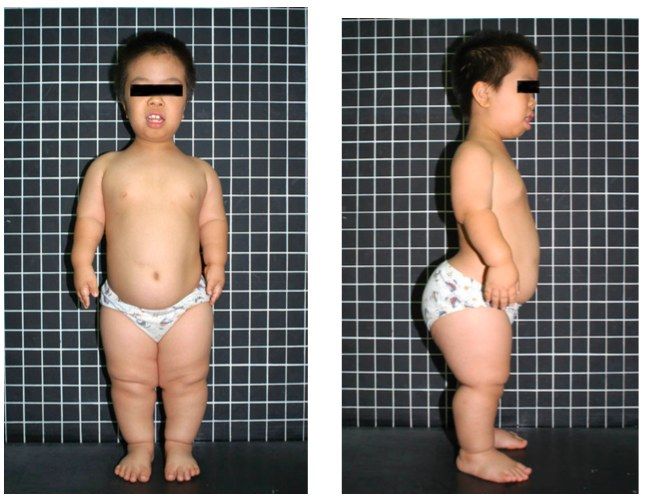
- Hand can only reach the pelvis instead of the thigh; Head also appears large
- Rhizomelic short stature: humerus shorter than forearm, thigh similar length to leg (usually 0.8)
Q2What dysmorphic, limb and trunk features are seen in achondroplasia?▸
- Dysmorphism: frontal bossing, hypoplastic midface, otitis media, normal IQ
- Limb: elbow flexion contracture (posterior radial head dislocation), trident hand, genu varum
- Trunk: TL kyphosis, LS hyperlordosis; spinal stenosis (short pedicles), cervical myelopathy (foramen magnum stenosis)
- Protruberant abdomen. Flat chest
Q3What further examination is needed in suspected achondroplasia?▸
- Standing and seating height (standing <3rd percentile, sitting normal)
- Measure limb length (rhizomelic shortening)
- Ligamentous laxity
- Check elbow ROM and posterior radial head dislocation
Q4What is the differential diagnosis of disproportionate short-limb dwarfism?▸
- Hypochondroplasia
- Pseudochondroplasia
- Leri Wiel Dyschondroosteosis (Leri-Weill dyschondrosteosis)
- MED
Q5What is the Rubin classification of achondroplasia and how common is it?▸
- Rubin classification: physeal hypoplasia
- Most common cause of disproportionate dwarfism
Q6What is the genetics of achondroplasia?▸
- AD; sporadic mutation >80% (risk with advanced paternal age)
- Mutation of FGFR3 on chromosome 4
- glycine base being substituted by an arginine base -> prolonged receptor activation after ligand binding -> excessive growth limitation
Q7What is the pathophysiology of achondroplasia?▸
- Abnormal chondroid production by chondroblasts in the proliferative zone during enchondral bone formation at the physis
- Intramembranous ossification not affected
- Quantitative cartilage defect
- Diagnosed by prenatal USG
Q8What orthopaedic problems occur in achondroplasia?▸
- Foramen magnum stenosis
- Spinal stenosis
- Radial head subluxation with elbow flexion contracture
- Genu varum
Q9Why is spinal surgery difficult in achondroplasia?▸
- Positioning
- Exposure – increase lumbar lordosis
- Anatomy - small pedicles
Q10Describe the hand X-ray findings in this skeletal dysplasia.📷▸
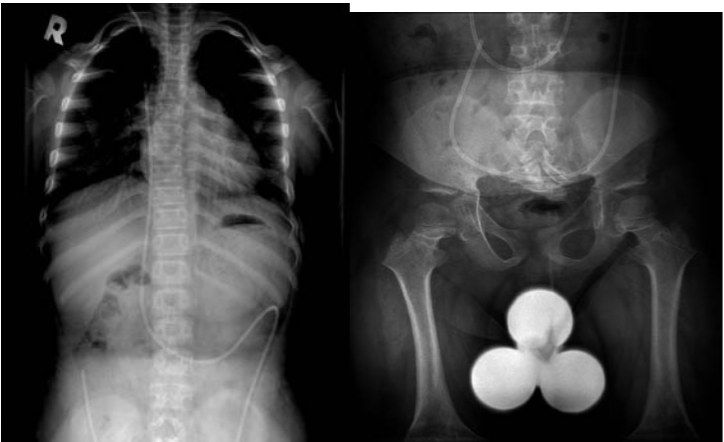
- Increased gap between long and ring finger
- Irregular epiphysis
- Short metacarpals with suspected flaring of the metaphysis; metacarpal also appear short with suspected flaring of metaphysis
Q11What are the spinal findings on the scoliosis series?▸
- VP shunt in situ
- Interpedicular distance decreased from cranial to caudal
- Scalloping of vertebrae
- Very flat horizontal sacrum
- Thoracolumbar kyphosis
Q12What are the pelvic findings?▸
- Horizontal acetabular roof
- Small squared iliac wings
- Champagne glass pelvic inner contour
- Short SI notches
Q13What are the lower limb findings?▸
- Disproportionate long bone development
- Metaphyseal flaring
- V-shaped physis
- Genu varum
- Lateral fibular bowing
Q14What do pseudochondroplasia, achondroplasia and hypochondroplasia have in common, and how is achondroplasia distinguished?📷▸
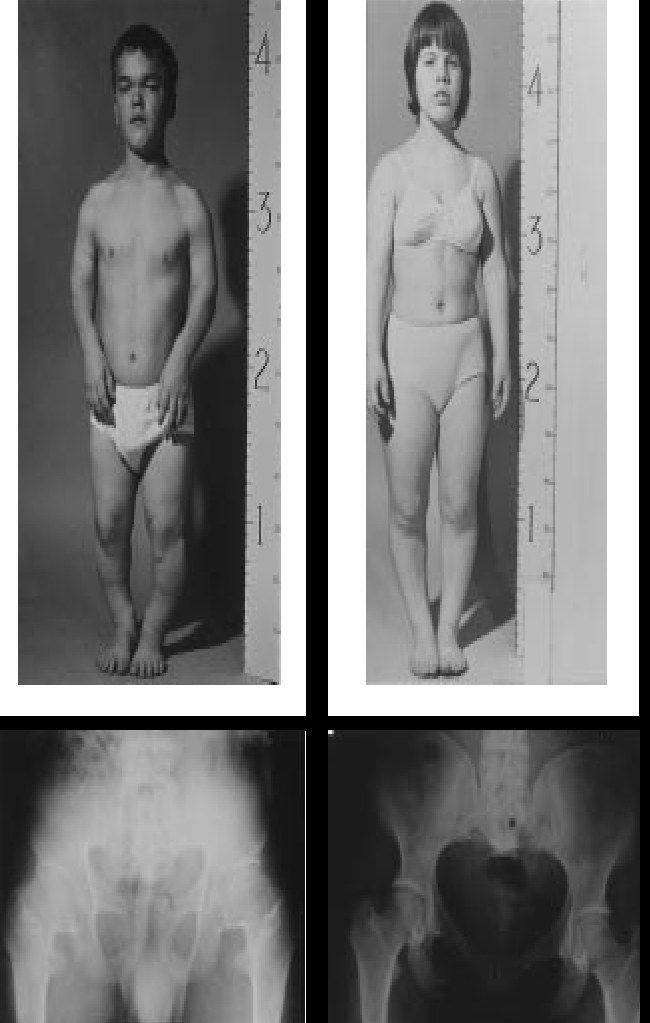
- All are AD with short stature
- Achondroplasia is the only one with an abnormal face and trident hand
Q15What are the features of pseudochondroplasia?▸
- AD, COMP defect on chr19 (also in MED); onset usually 2nd decade
- Rhizomelic short limbs, Hip dysplasis (hip dysplasia)
- Windswept LL and knee recurvatum
- Fingers short and broad
- Spine: kyphoscoliosis, platyspondyly, odontoid hypoplasia; normal IQ
Q16How does pseudochondroplasia differ from SED?▸
- Mimics SED because of epiphyseal changes
- Difference: later onset, milder spine deformity and normal face in pseudochondroplasia
Q17What are the features of hypochondroplasia?▸
- AD, rare form of the same FGFR3 gene
- Milder dwarfism
- Face normal; spine changes rare
- MR; rare need for surgery
Q18What is proportionate dwarfism and what are the examples?📷▸
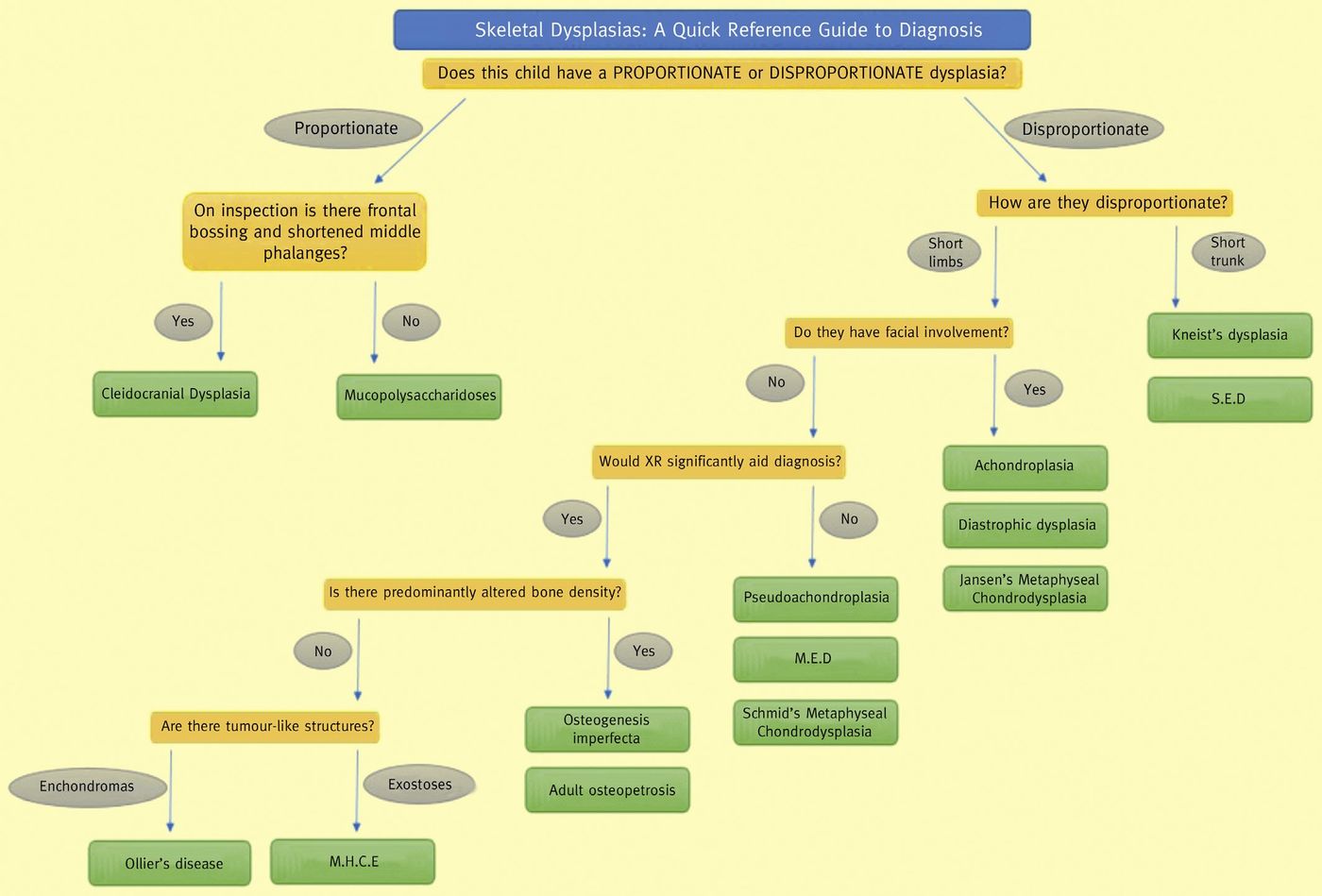
- Symmetric decrease in both trunk and limb length
- MPS
- Cleidocranial dysplasia
Q19Classify disproportionate dwarfism with examples.▸
- Short-trunk: Kniest syndrome, spondyloepiphyseal dysplasia
- Short-limb: achondroplasia, diastrophic dysplasia
Q20What is the difference between proportionate and disproportionate dwarfism?▸
- Proportionate: symmetric decrease in both trunk and limb length (e.g. MPS, cleidocranial dysplasia)
- Disproportionate: short-trunk (Kniest, SED) or short-limb (achondroplasia, diastrophic dysplasia)