Spine Non Trauma
Posterior approach and failed back
Posterior spinal approach, failed back syndrome and non-organic clinical signs
18 questions
3 source pages
2 images
Images appear with the first question taken from each source page — tap a question to open it.
Q1How is the patient positioned for a posterior lumbar approach?📷▸
- Prone on an OSI table
- Wilson frame or 4 posters
- Pressure areas well padded
Q2How is the level confirmed and the incision/dissection performed?▸
- Surface landmark: intercrestal line = L4/5
- Midline incision along the spinous processes through the lumbar fascia
- Subperiosteal dissection laterally to the facet joints (to the transverse process if fusion, but not beyond the intertransverse ligament)
- Cobb used to strip laterally along the lamina until facet capsules identified but not violated
Q3Describe the decompression steps in a posterior lumbar approach.▸
- Remove spinous processes of operative levels with rongeur
- Blunt dissection between the lamina of the level above and the ligamentum flavum with an angled curette to create a working window
- Thin the cephalad lamina with a burr, complete with a Kerrison rongeur to expose the ligamentum flavum, leaving at least 7mm pars
- Extend caudally to the superior most 3mm of the inferior lamina
- Dissect the ligamentum flavum from the medial facet edge and remove; facetectomy (medial 3mm vs total)
Q4What are the boundaries of Kambin triangle?▸
- Exiting nerve root
- Medial margin of the superior articular process (SAP)
- Superior endplate of the caudal vertebra
- Also a landmark for nerve root injection
Q5What is the traditional safe triangle for nerve root injection?▸
- Inferior margin of the pedicle
- Exiting nerve root
- Lateral margin of the vertebral body
Q6What are the steps of discectomy in the posterior approach?▸
- Retract the traversing nerve root
- Epidural vein hemostasis
- Confirm the level with a needle
- Annulotomy with a discectomy knife
- Discectomy
Q7What does the 2014 Cochrane review show for minimally invasive versus open discectomy?▸
- MIS: higher leg pain
- Reoperation/readmit rate due to recurrent disc herniation higher (18 vs 13%)
- Lower risk of infection
- Long-term functional and clinical outcomes show no difference
Q8What is failed back syndrome?📷▸
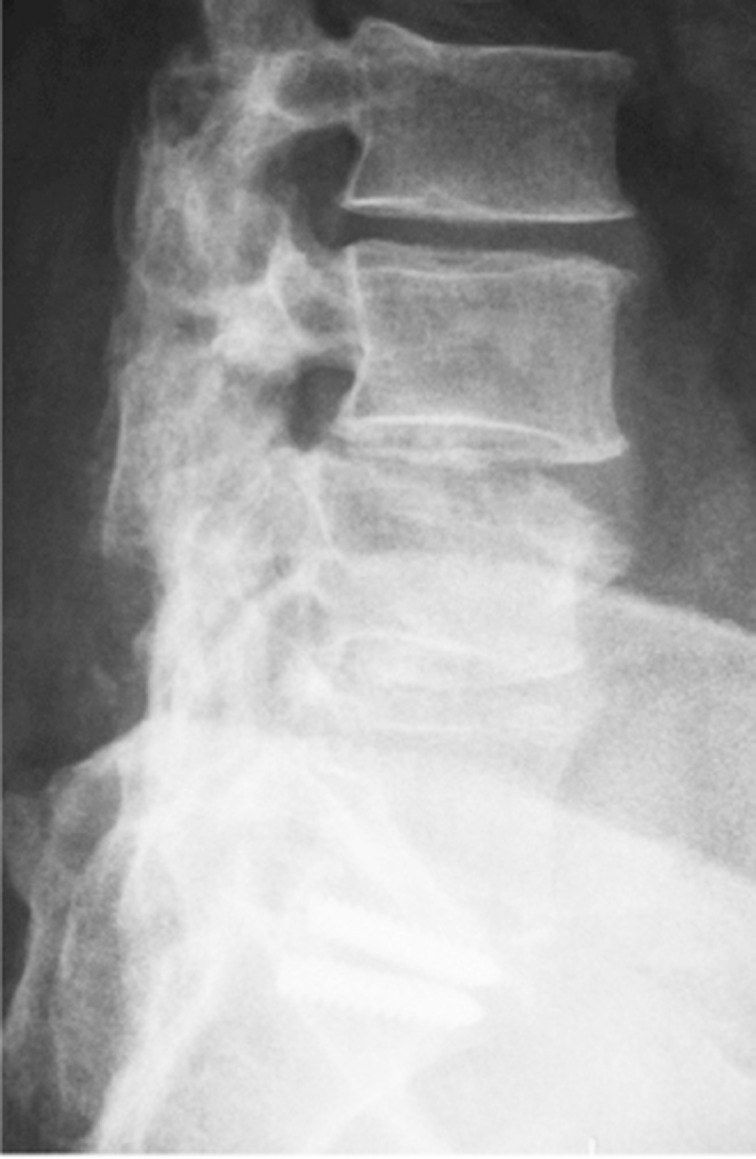
- Recurrent or residual back pain following previous surgery on the lumbar spine
- Causes are multifactorial, often the result of poor patient selection
- Contributors: patient (physical/psychological), disease (recurrent disease), surgical (indication/technical)
Q9What history and risk factors are important in failed back syndrome?▸
- Initial indication for surgery, preoperative symptoms, perioperative complications
- Postoperative pain relief and current nature of pain; background history
- Risk factors for poor outcome: IOD, smoking, obesity, psychiatric history
Q10What is the 4W+1 approach if pain never resolved after surgery?▸
- Wrong patient (Waddell signs - DONTS) or wrong diagnosis
- Wrong indication
- Wrong level
- Wrong procedure done
- Poor surgical technique - inadequate decompression, iatrogenic instability, implant malposition
Q11What is the RIPIE differential if pain recurred after initial relief?▸
- Recurrent disease (recurrent disc, adjacent segment)
- Infection
- Pseudoarthrosis
- Instrumentation failure
- Epidural fibrosis
Q12How can symptoms of failed back syndrome be classified?▸
- Mechanical symptoms: recurrent disc herniation, discogenic pain, instability, spinal stenosis
- Non-mechanical symptoms: local scar tissue formation (arachnoiditis, epidural fibrosis), psychosocial issues, abdominal/pelvic/systemic disease
Q13How do leg pain and back pain differ in their causes after lumbar surgery?▸
- Leg pain: prolapsed intervertebral disc (PID), stenosis
- Back pain: discogenic pain, instability
Q14What specific postoperative diagnoses can present after lumbar surgery?▸
- Arachnoiditis: inflammation of the arachnoid layer, no effective treatment
- Epidural fibrosis (3 months): responds poorly to re-exploration
- Diskitis (3-6 weeks postoperatively): rapid onset severe back pain - bedrest, bracing, antibiotics
Q15How are failed back syndrome and adjacent segment disease investigated?▸
- Bloods to rule out infection; long film
- CT: fusion status, implant loosening, bone regrowth, incomplete decompression
- MRI: recurrent disc, perineural scar; Scarring can be differentiated from recurrent HNP with a gadolinium-enhanced MRI
- ASD risk factors: obesity, preop disc protrusion/adjacent disc degeneration, poor restoration of sagittal balance, facet joint violation, long segment fusion (incidence 5-19%; JBJS article)
Q16How many positive non-organic signs suggest a non-organic cause?▸
- 3 or more positive signs suggest non-organic causes
Q17List the five non-organic signs.▸
- Distraction
- Overreaction
- Non-dermatomal distribution
- Tenderness
- Simulation
Q18Which mnemonic is used for the five non-organic (Waddell) signs?▸
- DONTS
- Distraction, Overreaction, Non-dermatomal distribution, Tenderness, Simulation