Spine Non Trauma
Sacral agenesis and Bertolotti syndrome
Congenital lumbosacral anomalies: sacral agenesis and Bertolotti syndrome
8 questions
2 source pages
2 images
Images appear with the first question taken from each source page — tap a question to open it.
Q1What is sacral agenesis associated with?📷▸
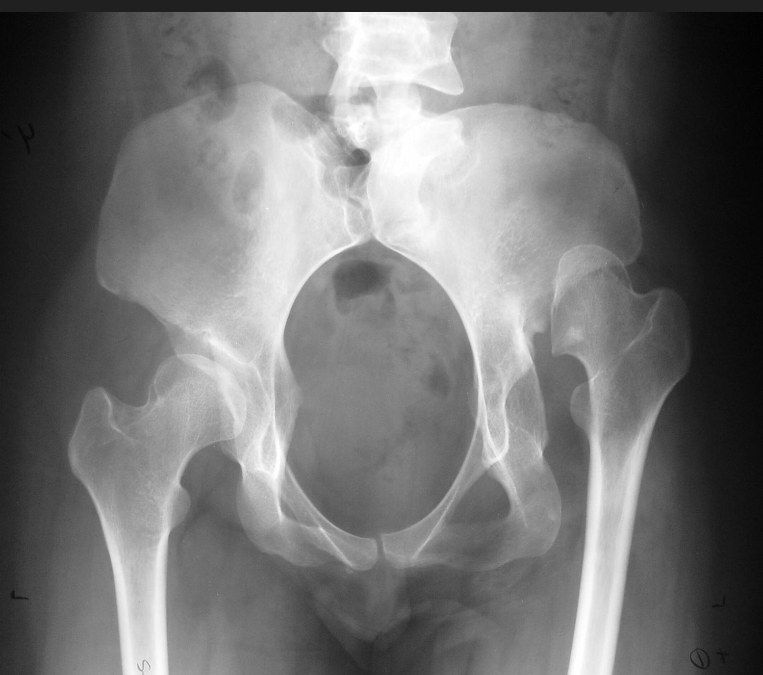
- Rare; associated with maternal diabetes
- Part of caudal regression syndrome
- Gastrointestinal disorders e.g. imperforate anus
- Genitourinary and cardiovascular disorders
- Lower extremity deformities and progressive kyphosis
Q2What is the Renshaw classification of sacral agenesis?▸
- Type I: unilateral
- Type II: partial, bilaterally symmetrical
- Type III: ilium articulating with vertebra present
- Type IV: fused both ilia or iliac amphiarthrosis
Q3How is Renshaw type 1/2 sacral agenesis managed?▸
- Conservative physical therapy for Renshaw type 1/2
- Most become community ambulators
- Foot and knee deformities to be addressed
Q4How is Renshaw type 3/4 sacral agenesis managed?▸
- Operative management for Renshaw type 3/4
- Spinal stabilization procedures for progressive kyphosis and/or scoliosis
- Limb amputation for non-functional lower limb deformities
Q5What is the Castellvi classification of Bertolotti syndrome?📷▸
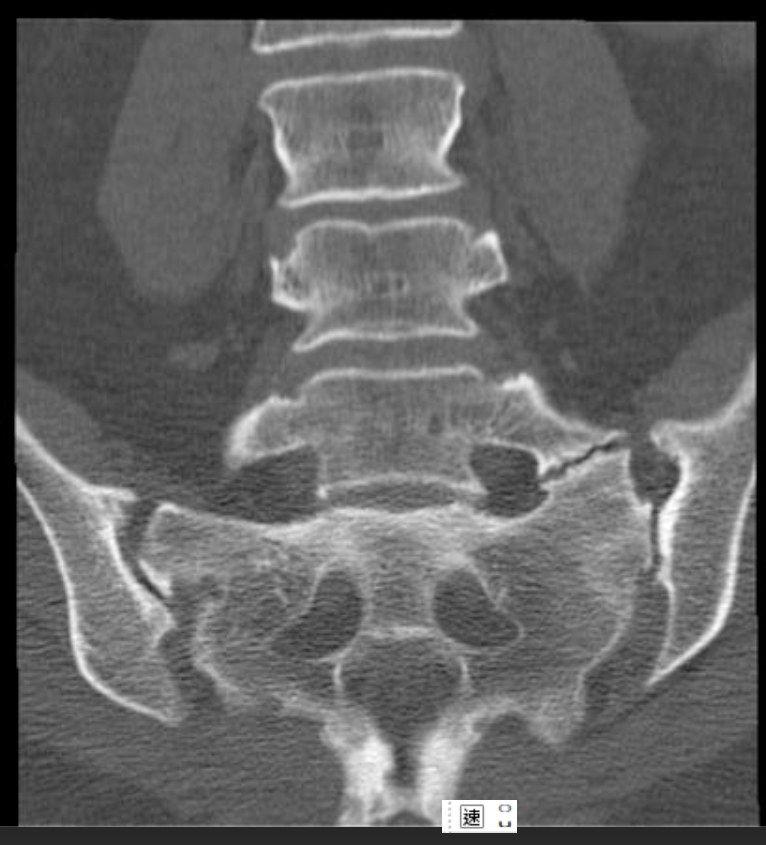
- Type I: enlarged transverse process >= 19 mm (a unilateral, b bilateral)
- Type II: pseudoarticulation of transverse process and sacrum (a/b)
- Type III: transverse process fuses with sacrum (a/b)
- Type IV: type IIa on one side and type IIIa contralateral
Q6Which Castellvi type is associated with lumbar disc herniation?▸
- Type II
- Not associated with types I, III or IV
Q7What are the reported rates of sacralization and lumbarization?▸
- Sacralization: 7%
- Lumbarization: 5%
Q8In the Castellvi classification, what do the suffixes a and b mean?▸
- a = unilateral
- b = bilateral