Hip
Hip resurfacing
Technique, indications and outcomes of metal-on-metal hip resurfacing arthroplasty
15 questions
2 source pages
2 images
1 fact-check flags
Images appear with the first question taken from each source page — tap a question to open it.
Q1What are the indications for hip resurfacing?📷▸
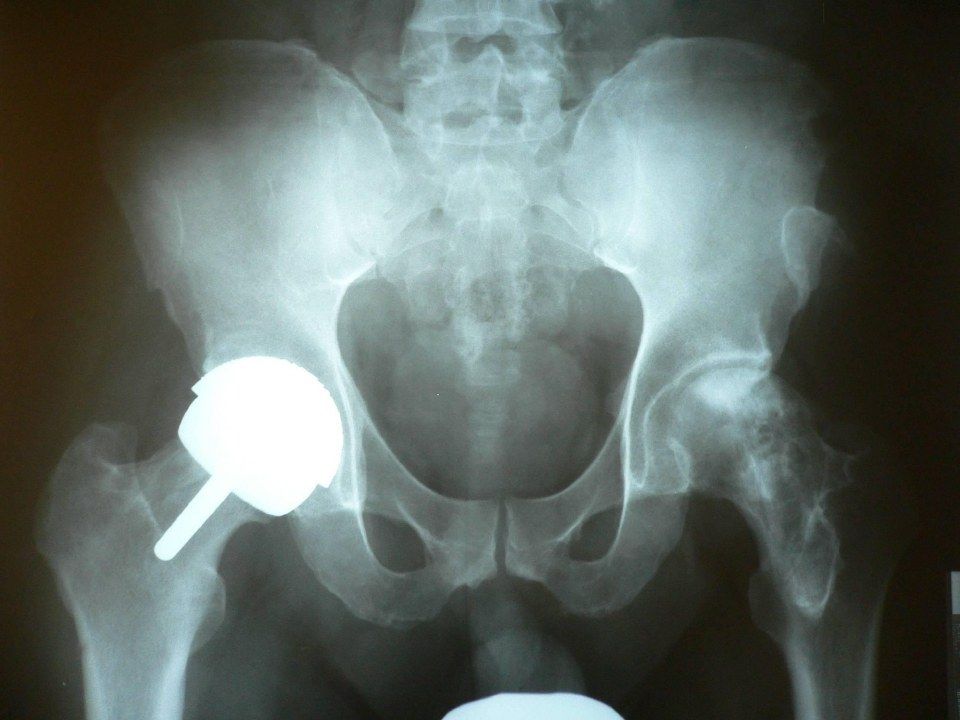
- Large diameter metal-on-metal bearing
- Best in young, high-demand individuals with end-stage arthritis and good bone stock
Q2What are the benefits and risks of hip resurfacing?▸
- Benefits: less particulate-induced osteolysis, low dislocation rate, normal hip kinematics
- Benefits: preserve proximal femoral bone stock, self-healing
- Risks: femoral neck fracture
- Risks: metal ion toxicity
Q3What head size is required for hip resurfacing and why does a small head matter?▸
- Small acetabulum or abnormal anatomy with head size < 48mm is a contraindication
- Small heads are associated with more impingement and edge loading
Q4What do you look for on follow-up MARS MRI after hip resurfacing?▸
- Pseudotumour
- Abductor detachment
- Presence and extent of osteolysis
- Periprosthetic fluid collections
Q5Describe the Anderson classification of ARMD.▸
- A = normal appearances including seromas
- B = infection
- C1 = mild MOM disease, soft tissue mass < 5cm
- C2 = moderate MOM disease, mass > 5cm or muscle atrophy / marrow oedema
- C3 = severe MOM disease: fracture, tendon avulsion, bone marrow signal change
Q6What are the contraindications to hip resurfacing?▸
- Inadequate neck bone stock
- Small acetabulum/abnormal anatomy with head size < 48mm
- Small heads -> more impingement and edge loading
- Relative: coxa vara, LLD
Q7What proportion of hip resurfacings have a favourable outcome?▸
- 80-90% favourable
Q8What is hip resurfacing and who is it best for?📷▸
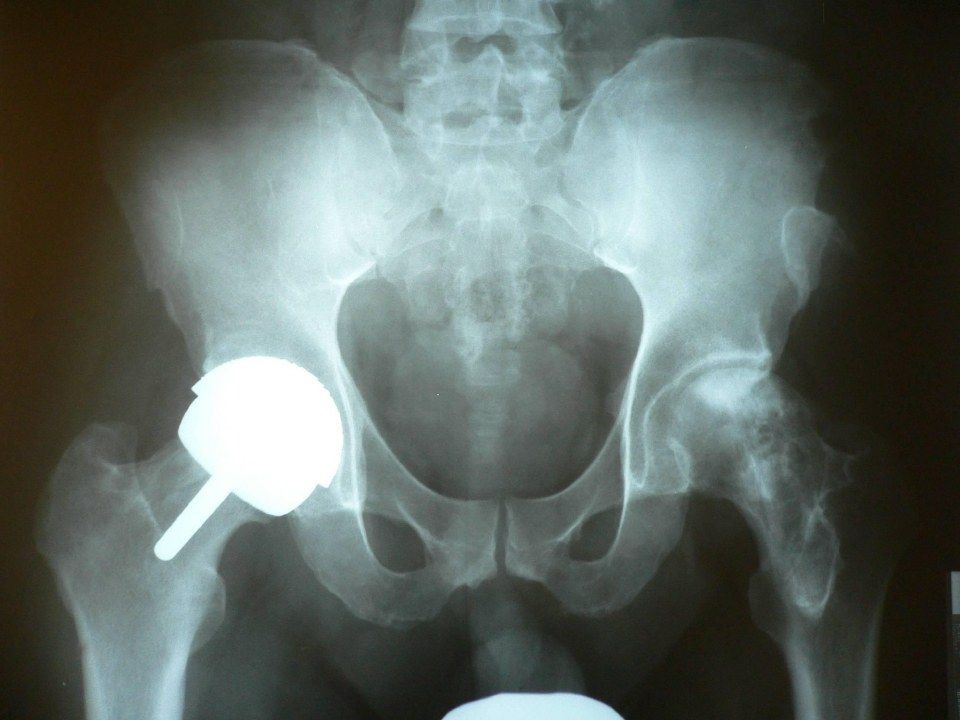
- Large diameter metal-on-metal bearing
- Best in young, high demand individuals with end stage arthritis and good bone stock
Q9What are the functional benefits of hip resurfacing?▸
- Low dislocation rate (large head, bigger jump distance)
- Increased ROM before impingement
- Normal hip kinematics
Q10What are the tribological and other benefits of hip resurfacing?▸
- Less wear (fluid film formation, low coefficient of friction per lecture notes)
- Less particulate-induced osteolysis
- Self healing
- Preserves proximal femoral bone stock
- Less risk of infection, DVT/PE
Q11What are the risks of hip resurfacing?▸
- Femoral neck fracture
- Metal ion toxicity, highest at 1-2 years (ARMD)
- Local soft tissue reaction: pseudotumour (ALVAL - aseptic lymphocyte-dominant vasculitis-associated lesion)
- T-cell mediated hypersensitivity with macrophage activation causing a vicious cycle
Q12What is ARMD in metal-on-metal hip resurfacing?▸
- Adverse reaction to metal debris, related to metal ion toxicity which is highest at 1-2 years
- Manifests as pseudotumour (ALVAL) and T-cell mediated hypersensitivity activating macrophages in a vicious cycle
Q13What are the contraindications to hip resurfacing?▸
- Inadequate neck bone stock
- Small or abnormal acetabulum
- Relative: coxa vara, LLD
- Pregnant women
- Renal failure
Q14What determines whether a fluid film is achieved in a metal-on-metal bearing?▸
- Optimal clearance 90-200um
- Conformity (high vs low)
- Contact (polar, midpolar, equatorial)
- Position sensitivity - high conformity with polar contact is good
Q15How do you work up a symptomatic patient with MoM THR?▸
- History and PE: time and brand of THR, current ROM, any mass, rule out infection (WCC, CRP, ESR)
- MRI/USG for metallosis; blood Cr/Co ions at 0 and 3 months
- Consider revision
- Follow MHRA recommendations: 4 groups - MoM resurfacing, stemmed MoM <36mm head, stemmed MoM >36mm head, DePuy ASR
Fact check
Metal-on-metal hip resurfacing has a low coefficient of friction of 0.8 — decimal error — In vitro studies report an average coefficient of friction of about 0.079-0.098 (~0.08) for MoM resurfacing bearings, not 0.8 — source