Spine Paed
Scheuermann kyphosis
Scheuermann kyphosis diagnosis, bracing indications, operative correction and complications.
12 questions
1 source pages
1 images
1 fact-check flags
Images appear with the first question taken from each source page — tap a question to open it.
Q1What are the Sorensen criteria for Scheuermann's kyphosis?📷▸
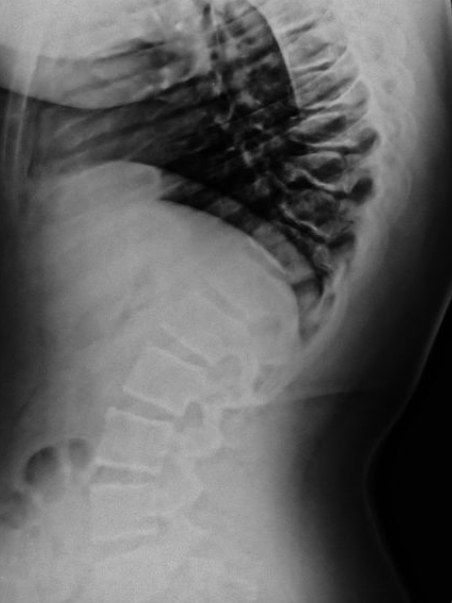
- Rigid thoracic hyperkyphosis >45 degrees (normal 20-45 degrees)
- Anterior wedging >5 degrees in 3 consecutive vertebrae
- Irregular endplates
Q2What is the epidemiology and pathophysiology of Scheuermann's kyphosis?▸
- Male > female
- Autosomal dominant inheritance, high penetrance with variable expression
- Distribution thoracic > thoracolumbar > lumbar
- Ring apophysis necrosis (occurs at age 12)
- Cartilaginous endplate mechanical weakening
Q3What are the pathology and associations of Scheuermann's kyphosis?▸
- Thickened ALL, narrowed vertebral disc, wedged vertebral bodies
- Collagen-to-proteoglycan ratio in the endplate matrix is below normal, causing abnormal end plate ossification
- Spinal associations: spondylolysis and scoliosis
- Pulmonary compromise
Q4What are the differential diagnoses of thoracic hyperkyphosis?▸
- Postural
- Compensation for lumbar spondylolisthesis
- Congenital (NF dystrophic curve)
- Infection/ tumour
Q5How is Scheuermann's kyphosis investigated?▸
- X-ray: consecutive anterior wedging, endplate irregularity, disc narrowing, spondylolysis and scoliosis
- Supine hyperextension fulcrum view: rules out postural kyphosis and aids preop planning; <50% correction needs anterior release
- MRI for disc pathology, cord compression, epidural cyst and spinal stenosis
- Ask for hyperextension X-ray to see whether the kyphosis is rigid
Q6What are the symptoms of Scheuermann's kyphosis?▸
- Thoracic/lumbar pain (compensatory hyperlordosis)
- Pulmonary compromise in severe kyphosis
- Cosmesis
- Ataxic gait
- Knee FFC
Q7What are the clinical findings of Scheuermann's kyphosis?▸
- Thoracic kyphosis + compensatory lumbar hyperlordosis
- Tight hamstring
- Neurological deficits are rare
Q8What is the conservative treatment of Scheuermann's kyphosis?▸
- Physiotherapy for stretching if kyphosis <60 degrees
- Hyperextension brace - controversial in a growing patient
Q9What is the operative treatment of Scheuermann's kyphosis?▸
- PSF +/- Smith-Peterson osteotomy for >75 degrees, neurological deficit or severe pain
- Posterior approach advantages: less blood loss and reduced surgical time
- Posterior approach disadvantage: higher rate of pseudoarthrosis
Q10When is anterior release needed in Scheuermann's kyphosis?▸
- When the deformity does not correct to <50 degrees on hyperextension lateral views
Q11What is the limit of correction in Scheuermann's kyphosis surgery?▸
- Do not correct more than 50% of the original deformity
- Prevents junctional kyphosis or cord compression
Q12What is a Schmorl node?▸
- Herniation of IVD into the vertebral endplate
- Associated with degeneration
- 16% prevalence in SE Asia
Fact check
Sorensen criteria for Scheuermann's kyphosis require rigid thoracic hyperkyphosis >45 degrees — contested threshold — Most sources (Radiopaedia, StatPearls) quote the Sorensen kyphosis threshold as >40 degrees (normal 20-40); some texts use >45. The >5 degree wedging in 3 consecutive vertebrae is agreed. — (medium confidence) — source