Dysplasia Syndromes
Fibrodysplasia ossificans progressiva and dystrophy
Heterotopic ossification in FOP and orthopaedic management of Duchenne dystrophy.
10 questions
2 source pages
2 images
Images appear with the first question taken from each source page — tap a question to open it.
Q1What is fibrodysplasia ossificans progressiva (FOP)?📷▸
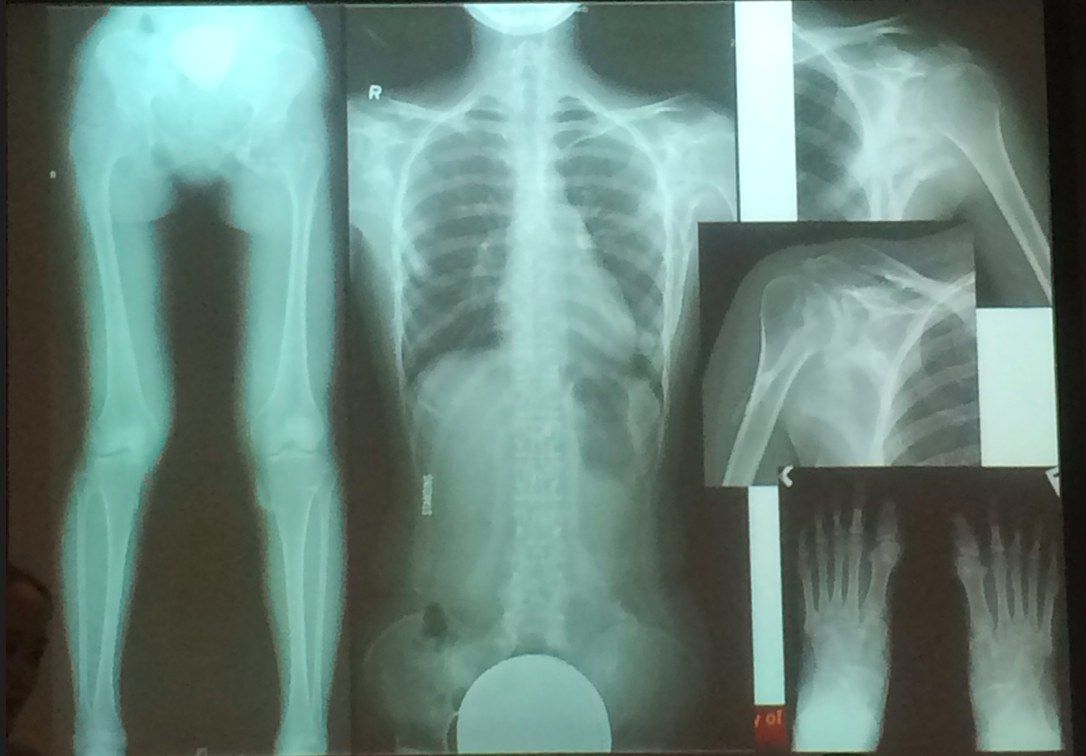
- Extremely rare connective tissue disease
- Mutation affecting the body's repair mechanism -> fibrous tissue (muscles, tendons, ligaments) ossifies spontaneously or when damaged
- Deformed big toe + very stiff joints
- No cure; median survival ~40
Q2What is the genetics of FOP?▸
- Mutation of the ACVR1 gene (activin A type I receptor, a BMP type-1 receptor)
- AD allele on chromosome 2q23-24
- Variable expression, complete penetrance
- Most are spontaneous mutations
Q3What is the genetic basis and pathophysiology of Duchenne muscular dystrophy?📷▸
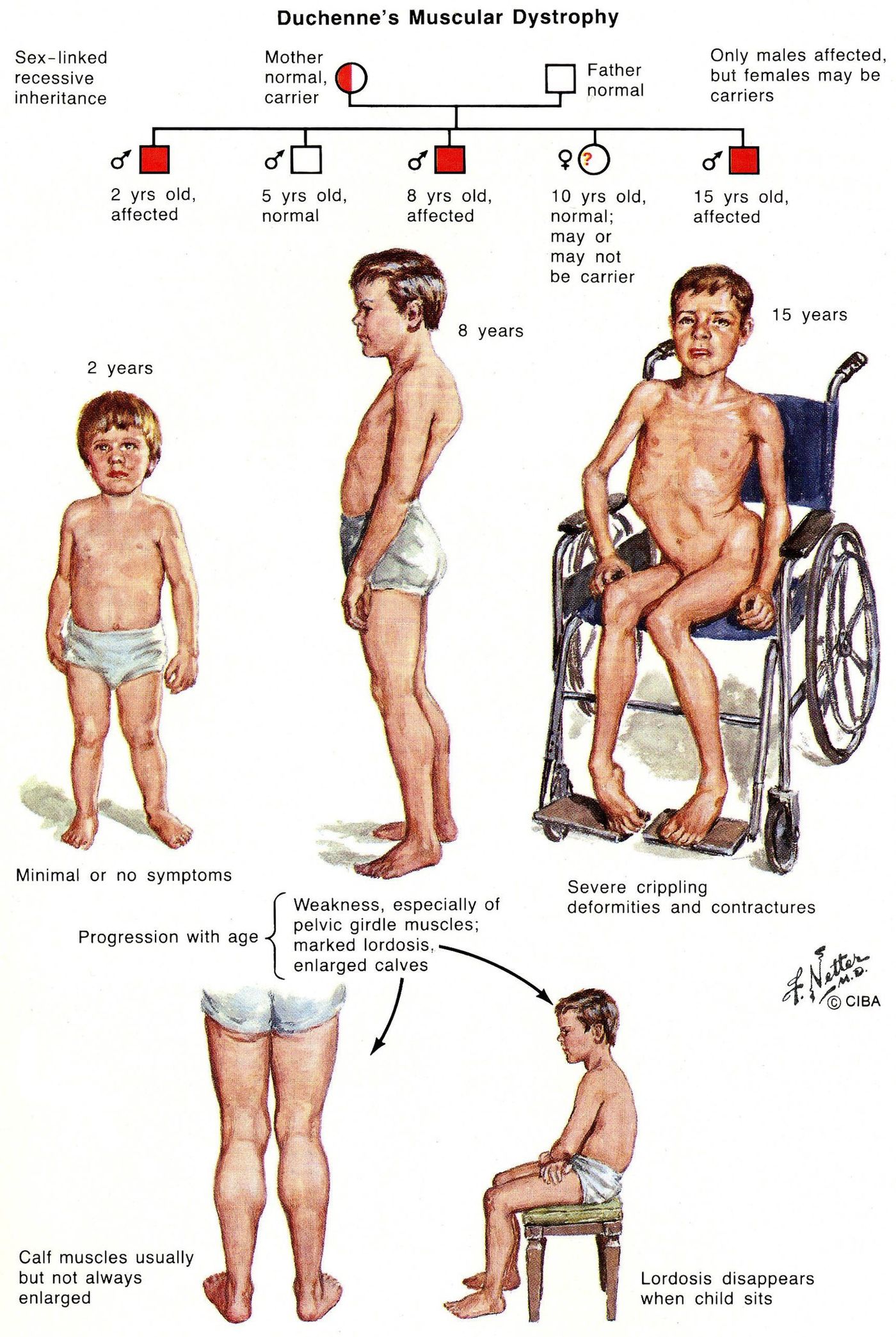
- X-linked recessive - Xp21.2 dystrophin gene
- Absent cytoskeletal dystrophin protein
- Dystrophin provides structural stability to the dystroglycan complex of the muscle cell membrane
Q4What examination findings are characteristic of DMD?▸
- Gower sign - climbs up own legs to stand (proximal weakness)
- Calf pseudohypertrophy, tiptoeing, waddling gait
- Scarf and Meryon signs in the floppy baby
- Hyperlordosis (compensates hip FFC), equinovarus foot, hip FABER and knee FFC contractures
Q5How is DMD diagnosed?▸
- CPK elevated
- EMG/NCV
- Gold standard: muscle biopsy - absent dystrophin
- Echo for cardiomyopathy
Q6What is the natural history and non-operative management?▸
- Wheelchair bound at 10 years, death at 20 years (respiratory difficulty)
- Steroid 0.75mg/kg/day: improves strength, slows weakening, prevents scoliosis, prolongs ambulation
- Delays deterioration of pulmonary function
Q7What are the surgical considerations in DMD?▸
- Soft tissue releases to prolong ambulation
- Hip containment NOT beneficial
- Scoliosis surgery: progresses 1-2 degrees per month from age 8-10; indications Cobb >30, FVC <30%; needs spinopelvic fusion
- Malignant hyperthermia common intraop
Q8How does DMD differ from SMA?▸
- SMA has absent reflexes (present in DMD)
- SMA has earlier onset
- SMA has no pseudohypertrophy
Q9What are the history and gait features of DMD?▸
- FHx; progressive weakness affecting proximal muscles first (gluteus wasting)
- Gait abnormalities: delayed walking, toe walking, waddling gait, difficulty climbing stairs, hopping or jumping
Q10What is the aim of management in DMD?▸
- Keep the patient ambulatory as long as possible
- Steroid 0.75mg/kg/day acutely improves strength, slows weakening, prevents scoliosis formation and prolongs ambulation
- Delays deterioration of pulmonary function