Dysplasia Syndromes
Epiphyseal, cleidocranial and nail-patellar dysplasia
Multiple epiphyseal dysplasia, cleidocranial dysplasia and nail-patellar syndrome.
13 questions
3 source pages
2 images
1 fact-check flags
Images appear with the first question taken from each source page — tap a question to open it.
Q1What is the genetics of spondyloepiphyseal dysplasia (SED)?📷▸
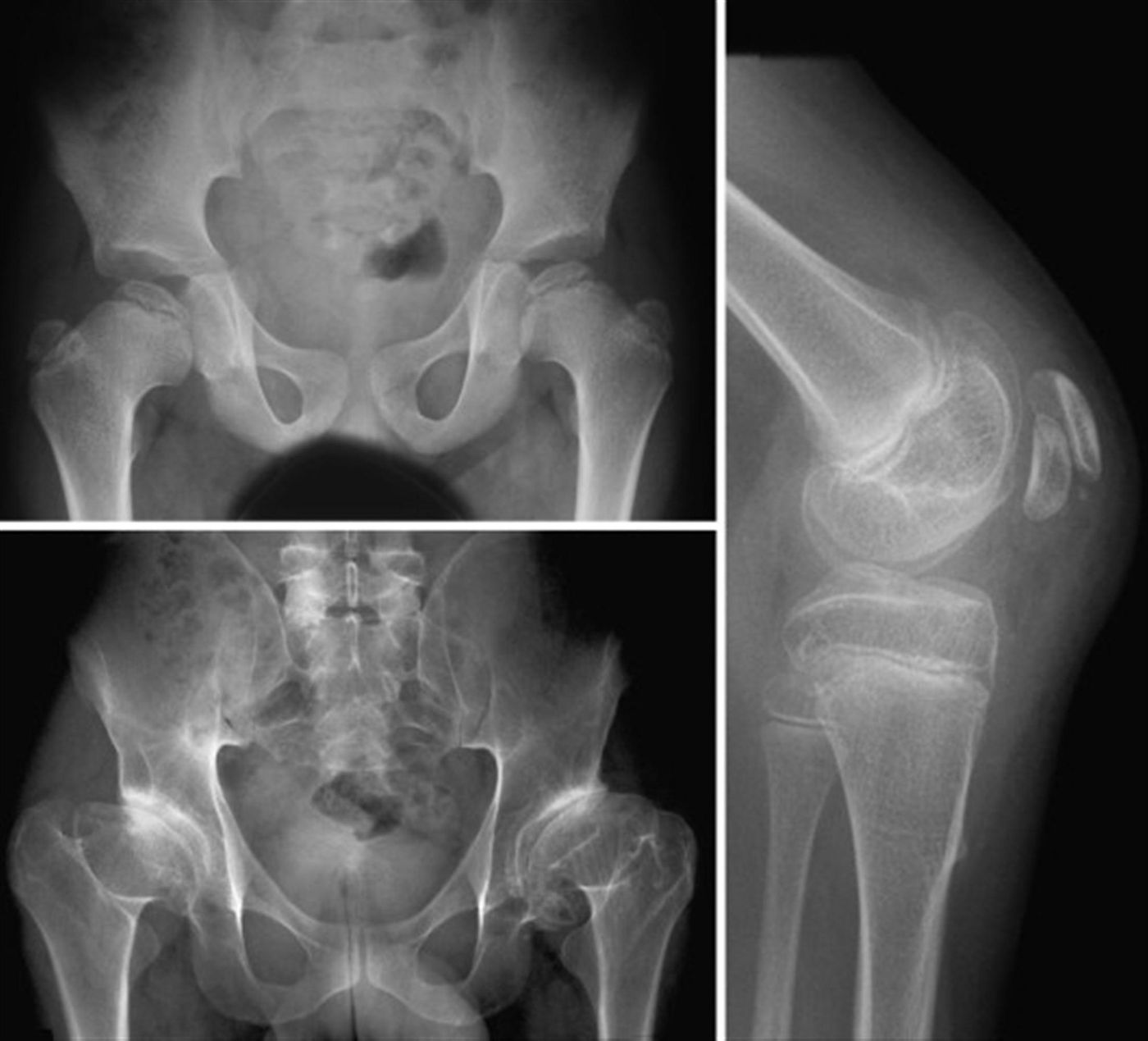
- COL2A1 on chromosome 12
- Congenita: onset at birth, AD
- Tarda: onset >5 years, X-linked recessive
Q2Which spinal and respiratory complications must be screened for in SED?▸
- Odontoid hypoplasia -> atlantoaxial instability (AADI) - risk of cervical cord injury
- Restrictive lung disease on CXR
- Progressive deformity: coxa vara, genu valgum and kyphoscoliosis
Q3What are the XR findings in SED?▸
- Hip dysplasia + coxa vara +/- genu valgum
- Platyspondyly
- Odontoid hypoplasia
- CXR: restrictive lung disease
Q4What is multiple epiphyseal dysplasia (MED) and its genetics?▸
- AD
- Type 1: COMP (cartilage mineralization protein; mutation increases proteoglycan in chondrocyte)
- Type 2: COL9A2
- Presents in early adolescence
Q5What are the clinical and XR features of MED?▸
- Disproportionate short stature; spine normal; IQ normal
- Limbs: coxa vara, genu valgum, ankle valgus, acromelia (short digits)
- Immature XR: small, flattened, fragmented epiphysis
- Mature XR: flattening of WB joint + incongruity +/- early OA
- Double layered patella
Q6What are the clinical features of SED?▸
- General: disproportionate short stature, rhizomelic pattern
- Face: hypertelorism, cleft palate; chest: pectus carinatum
- Limbs: coxa vara, genu valgum, equinovarus
- Spine: kyphoscoliosis, odontoid hypoplasia -> AADI
Q7What is the genetic basis of cleidocranial dysplasia?📷▸
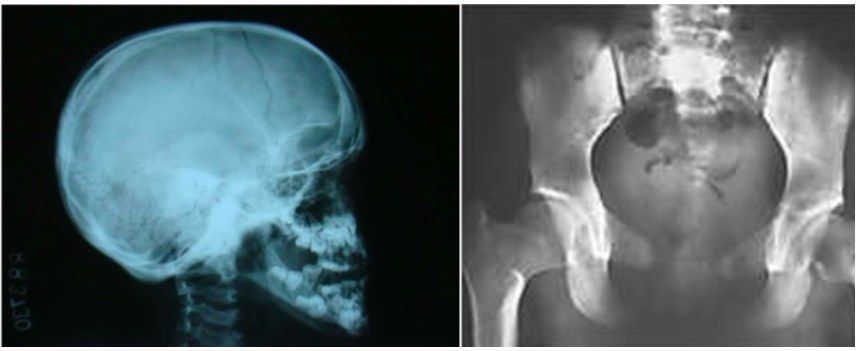
- AD, RUNX2/CBFA1 mutation affecting osteoblast
- Skeletal dysplasia affecting bones formed by intramembranous ossification
Q8What are the clinical features of cleidocranial dysplasia?▸
- Typical clavicular absence/hypoplasia, hypermobile shoulder
- Proportional short stature
- Midline: delayed suture closure -> frontal bossing; delayed pubic ossification; delayed permanent teeth
- Coxa vara
- Shortened MP of 3-5 fingers
Q9How is cleidocranial dysplasia managed?▸
- Only coxa vara requires treatment
- The other features are not described as requiring treatment
Q10What is the diagnostic tetrad of nail patella syndrome?▸
- Atrophic nails (usually thumb)
- Hypoplastic/absent patella - empty trochlear groove
- Iliac horns (pathognomonic, 80%)
- Hypoplastic radial head +/- subluxation -> FFC
Q11What is the genetics and what associations should be screened for?▸
- AD, LMX1B mutation (Lim homeobox transcription factor 1b)
- Type 5 collagen abnormality (as taught in the lecture; see factcheck)
- Association: glaucoma
- Association: nephropathy
Q12What else should be assessed in nail patella syndrome?▸
- External tibial torsion
- Thickened, tight ITB and lateral retinaculum
- Tight quadriceps
Q13What other conditions cause congenital patellar dislocation?▸
- Larson syndrome
- Arthrogryposis
- Down syndrome
Fact check
Nail patella syndrome is caused by a type 5 collagen abnormality — Not supported by current evidence — NPS is caused by loss-of-function mutations in LMX1B, a transcription factor; a type V collagen abnormality is not an established cause — (medium confidence) — source