P and O
Spinal orthoses
Spinal orthoses and trunk support devices such as the asymmetric Boston brace
11 questions
2 source pages
2 images
Images appear with the first question taken from each source page — tap a question to open it.
Q1What is the Milwaukee brace and when is it indicated?📷▸
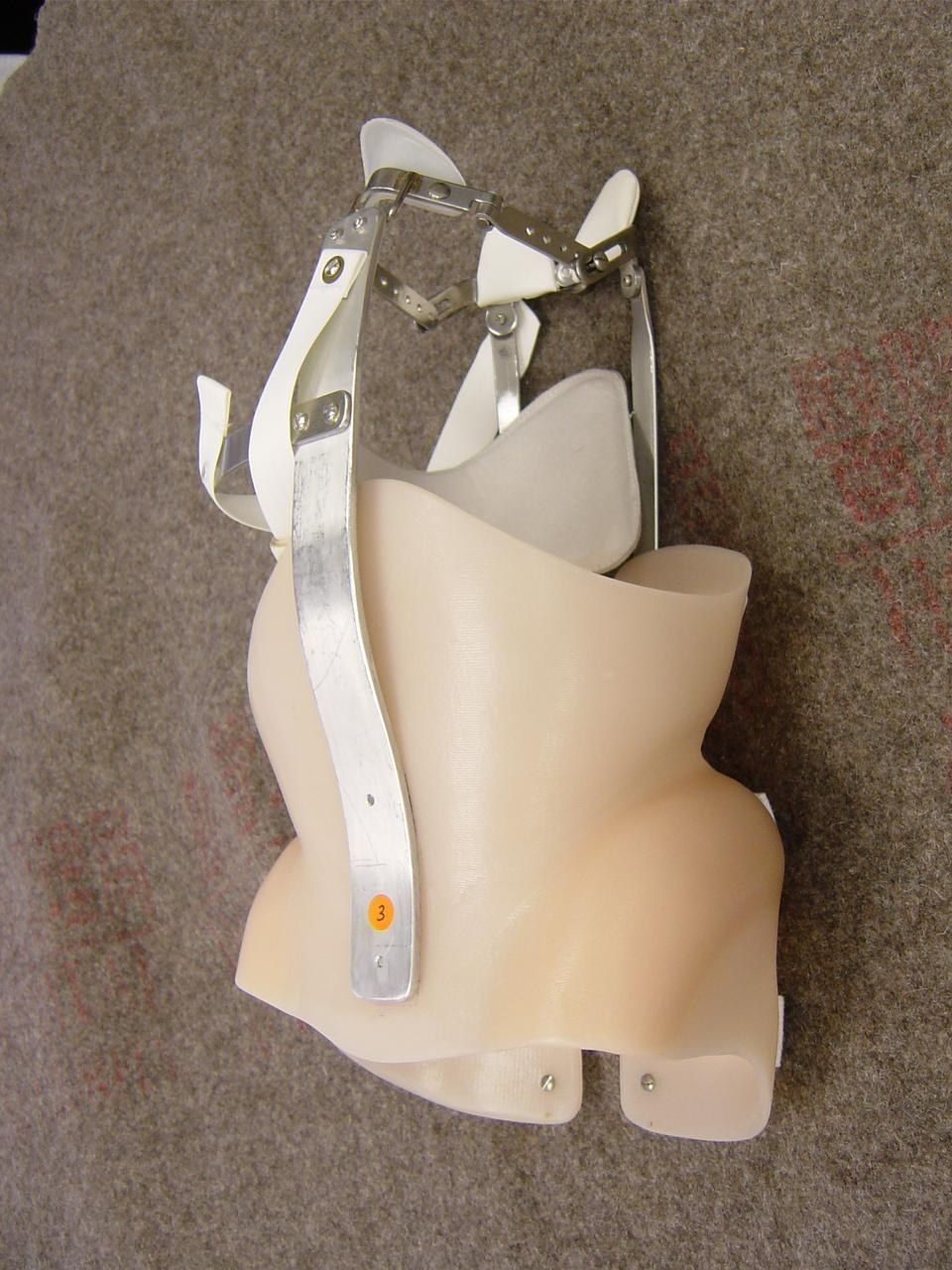
- Spinal orthosis
- For scoliosis with apex above T7
Q2What are the components of the Milwaukee brace?▸
- Thermoplastic pelvic girdle - most important, custom made, stable base; avoids iliac crest, allows hip flexion, clears seat when sitting
- Two posterior and one anterior upright
- Outrigger corrective pads (lumbar/thoracic/trapezius/kyphosis); axillary ring NOT for correction
- Neck ring with throat and occipital padding pieces
Q3What is the principle of correction of the Milwaukee brace?▸
- 3 point fixation
- At lumbar apical vertebrae
- At rib of thoracic apex
- Plus relief of pressure on the opposite side
Q4What is the dose-dependent effect and success rate of the Milwaukee brace?▸
- Dose dependent effect >18 hours
- Success 90%
Q5What are the contraindications to Milwaukee bracing?▸
- Disease: curves <20 degrees (not indicated); >50 degrees (not effective); short sharp curve
- Disease: loss of thoracic kyphosis (hypokyphosis or lordosis)
- Patient: skeletal maturity (Risser >4); predisposing emotional problems; sensory impairment; OI
Q6What are the weaning indications for a Milwaukee brace?▸
- Menarche >2 years
- Height plateau x 1.5 years
- Risser >4
- TWIII RUS to DR and DU
Q7What are the complications of the Milwaukee brace?▸
- Psychological and social
- Physical: pressure sore, pain, irritation of the anterior cutaneous nerve of thigh
- Physical: dental problem and under development of mandible
- Progression of the curve is a concern
Q8What is a Boston brace and when is it used?📷▸
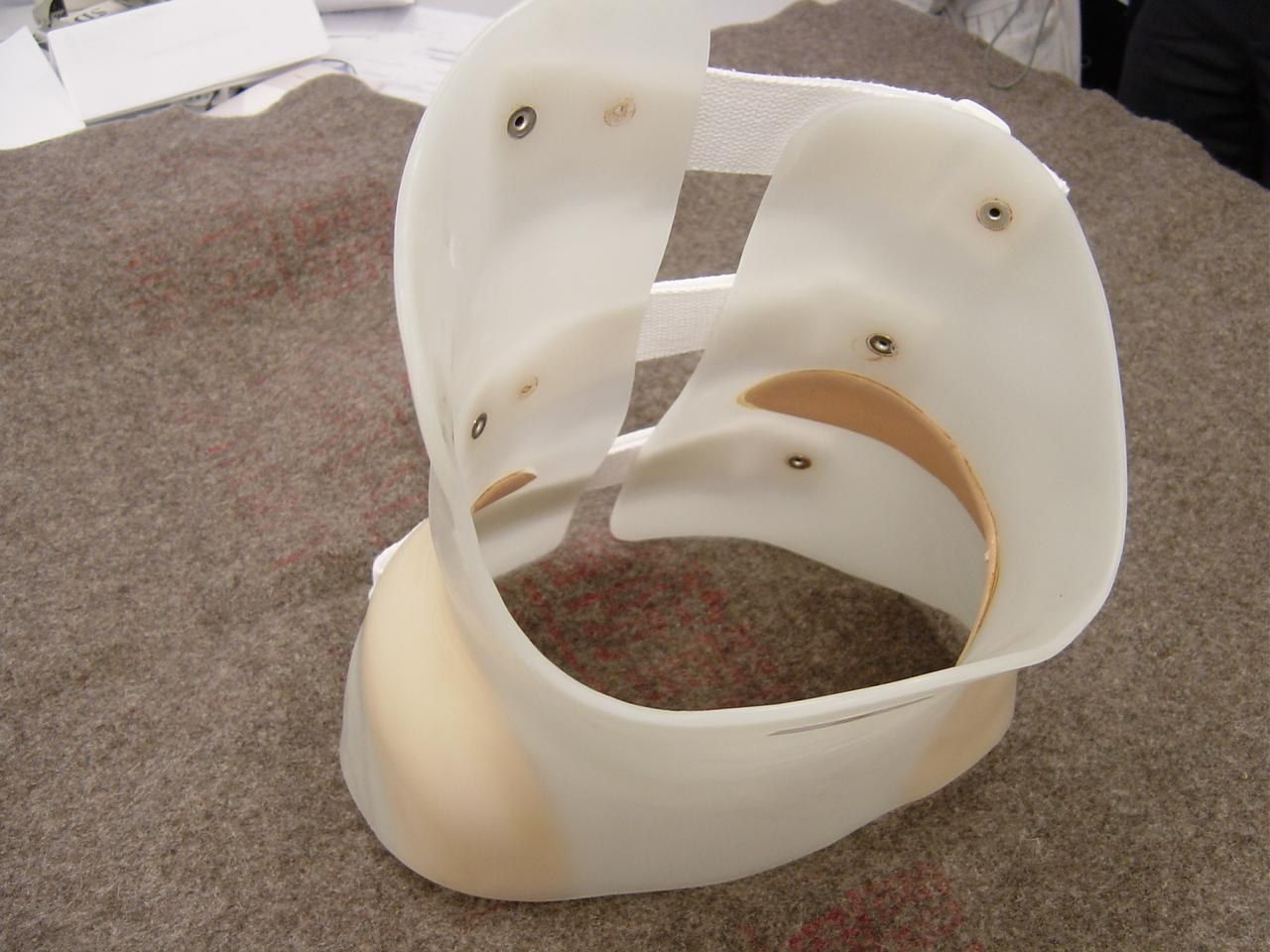
- TLSO with asymmetry; external spine orthosis
- Used in flexible scoliosis with apex at T8 or below
- Controls curve by 3 point fixation and HV principle
Q9How does the Boston brace correct deformity?▸
- Sagittal: control lumbar lordosis to control forward pelvic tilting
- Coronal: padding applies pressure on paravertebral muscle or articulating rib to control the curve
- 3. longitudinal: intra abdominal pressure to aim for correction and distraction
Q10How is the Boston brace made?▸
- Made from high temperature thermoplastic (NOT thermosetting), from cast of patient in corrected position
- Apply dynacast on trunk of patient (= negative mould); apply thermoplastics on plaster cast
- Liner (soft, semi-rigid) - urethane, silicone, pelite; padding over pressure points
- Underarm brace: for double curve
Q11How do you prevent complications of orthotics at the interface?▸
- Maximise lever arm
- Maximise surface contact area and conformity
- Protect bony prominence
- Moist absorbant lining