Others
Flap soft tissue coverage
Indications, types and principles of flap coverage for complex orthopaedic soft tissue defects.
7 questions
1 source pages
1 images
Images appear with the first question taken from each source page — tap a question to open it.
Q1Describe the Mathes classification of muscle flaps with examples.📷▸
- I: 1 dominant (tensor fascia lata)
- II: 1 dominant + 1 minor (gracilis)
- III: 2 dominant (gluteus maximus)
- IV: multiple minor (sartorius)
- V: 1 dominant + multiple minor (latissimus dorsi)
Q2How are flaps classified by location, blood supply and composition?▸
- Location: local (transposition, rotational, advancement, axial), regional (same limb), distant, free
- Blood supply: random or axial
- Composite: cutaneous, fasciocutaneous, musculocutaneous, osseocutaneous
Q3Which systemic and design factors are checked before raising a flap?▸
- Systemic: smoking, obesity, hypertension, PVD, immunosuppression
- Flap design: type, size, pivot point, axis, arc of rotation
- Doppler +/- to identify the pedicle; know pedicle type (Mathes I-V), with I, III, V more reliable and preferred with a broad base
Q4Describe the intra-operative principles of flap surgery.▸
- Elevation: preserve minor pedicles; complete pedicle mobilisation not required unless free flap; avoid tension during rotation and inset
- Insetting: tunnel size = flap base x2, avoid tension, haemostasis
Q5How is flap circulation monitored after surgery and what is done if it becomes impaired?▸
- Monitor flap circulation initially
- If impaired: consider systemic haemodynamic problem or local arterial/venous obstruction
- Can try to release stitches and reposition the flap
- Avoid pressure, constrictive bandage and motion (splint)
Q6Which pedicled flaps are used for proximal, middle and distal leg defects?▸
- Proximal: medial gastrocnemius (medial sural artery)
- Middle: soleus (branches of posterior tibial and peroneal arteries)
- Distal: distant/reverse sural flap (superficial sural artery via peroneal perforator)
Q7List common free flaps and their pedicles.▸
- LD flap (thoracodorsal artery), gracilis (medial circumflex femoral), serratus anterior (subscapular)
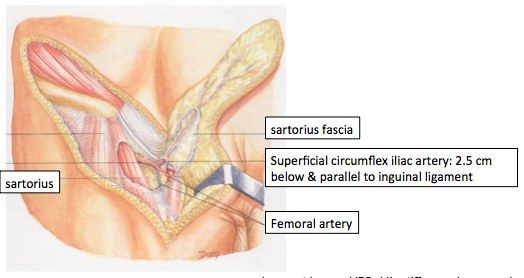
- Groin flap (superficial circumflex iliac, 2.5cm inferior to inguinal ligament)
- ALT flap (descending branch of lateral circumflex femoral artery)
- Radial forearm flap (radial artery; skin +/- muscle +/- bone)