Hip
Acetabular cup design and fixation
Acetabular component options including the porous-coated anatomical cup
8 questions
2 source pages
2 images
Images appear with the first question taken from each source page — tap a question to open it.
Q1What are the features of cementless acetabular implants?📷▸
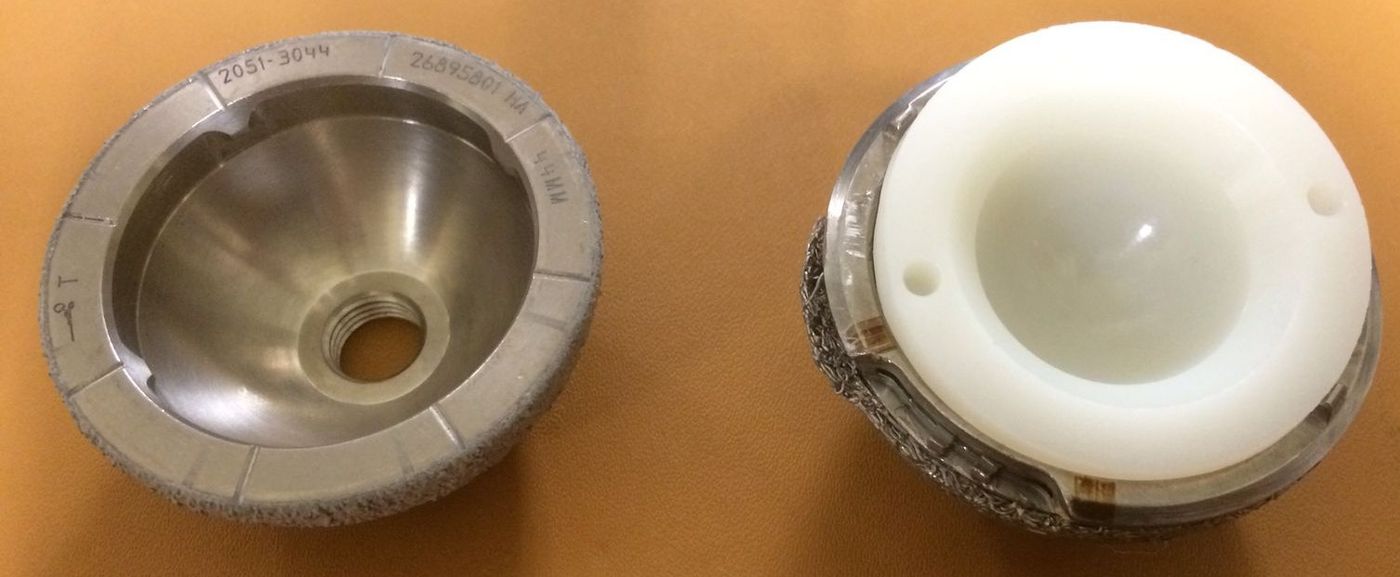
- Allow addition of screw fixation
- Screw holes increase the effective joint space
- Potential for backside wear
- Thinner liner
Q2What are the disadvantages of cemented acetabular implants?▸
- Decrease cancellous bone stress
- Difficult zone 1 pressurization - increases loosening
Q3Which DeLee and Charnley zone is the most common area for osteolysis?▸
- Zone 3 is the most common area for osteolysis
- DeLee and Charnley divided the acetabulum into 3 zones
Q4What are the features and proposed advantages of a bipolar acetabular implant?▸
- 2 interfaces
- Advantage is theoretical - possibly less dislocation and less acetabular erosion
- Immediate stability from screw fixation
- Quadrant
Q5What fixation does the PCA cup use initially and long term?📷▸
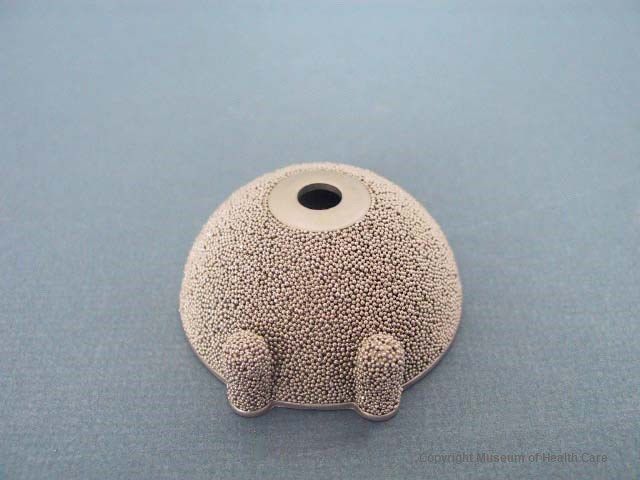
- Initial fixation: 2 pegs
- Long term: CoCr sintered beads
- Porosity is not great for bone ingrowth
Q6What are the problems with the PCA polyethylene liner?▸
- Irradiated in air - prone to generating PE particles
- Uneven thickness - thinnest at the locking mechanism with sharp edges, causing stress concentration
Q7What problems arise from the other design features of the PCA cup?▸
- Central peg and antirotation notch at the rim increase the effective joint space
- Protrusion beyond the cup leads to impingement
- Poor locking mechanism causes backside wear
Q8What is the 12-year survivorship of the PCA stem and cup?▸
- Stem 97%
- Cup 87.7%