Basic Science Trauma
Traction and implant removal
Skeletal traction principles and indications for removal of implanted fixation devices
7 questions
2 source pages
1 images
Images appear with the first question taken from each source page — tap a question to open it.
Q1Describe the entry point and trajectory for a distal femoral traction pin.📷▸
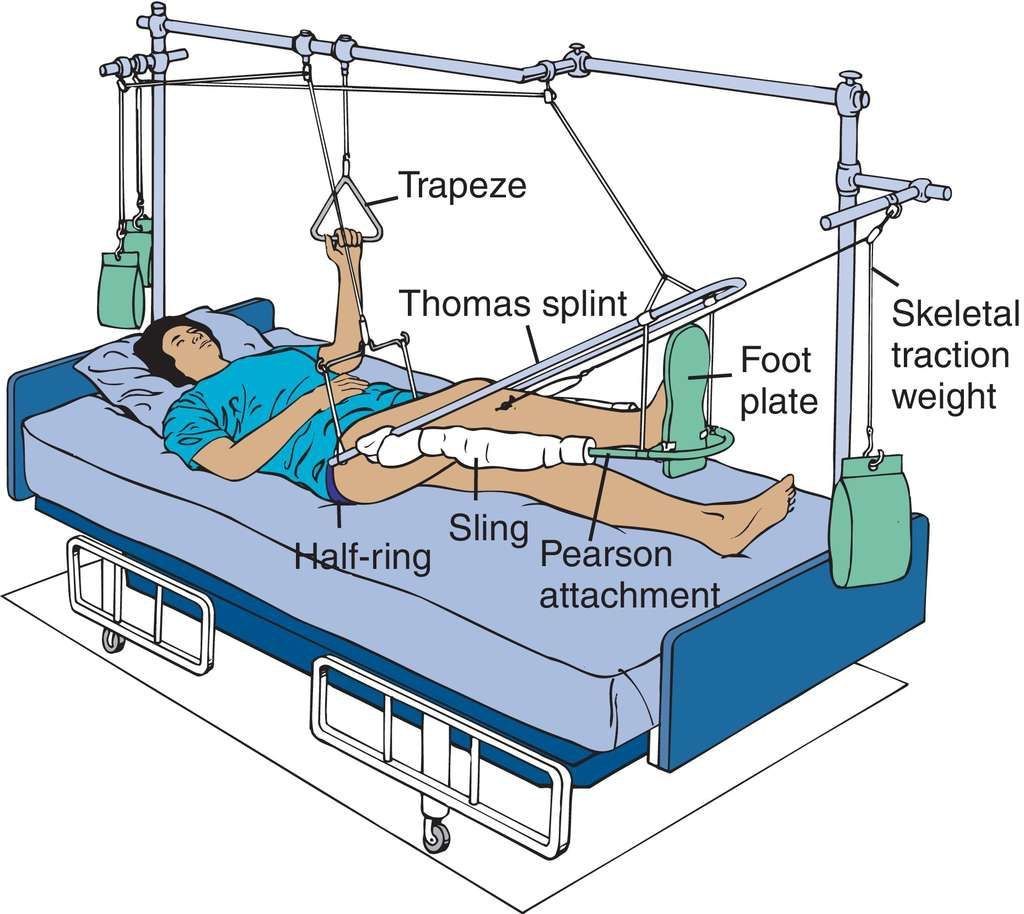
- Entry just proximal to the MFE (too proximal risks Hunter canal, too distal risks intercondylar notch)
- 2-3 fingerbreadths above the superior pole of the patella with the knee extended
- Trajectory parallel to the knee joint, medial to lateral
- Insert with the knee flexed, then release the ITB to prevent tethering
Q2Describe the entry point and trajectory for a proximal tibial traction pin.▸
- Entry 2cm distal and posterior to the tibial tuberosity
- Too proximal enters cancellous bone; too distal risks CPN injury
- Trajectory parallel to the knee joint, lateral to medial
Q3What is balanced traction?▸
- Traction in line with the femoral shaft
- Thigh sling just distal to the fracture to decrease extension by gastro, allow proximal fragment to reduce by gravity
- Counterweight is body weight, with a Pearson attachment
- End sling allows assisted knee flexion when prolonged traction is expected; prerequisite is stable callus
Q4What are the indications for removal of an implant?▸
- Infection
- Cross joint (implant crossing a joint)
Q5How do you remove a broken screw?▸
- Vice grip plier if the shaft is exposed
- Hollow reamer with a reverse thread conical extraction device
Q6How do you remove a locking screw cold-welded to a plate?▸
- Use a carbide drill
- Separate the head from the shaft
- Separate the plate at the level of the screw
- Separate the plate slightly away from the screw and use the plate as a T handle
Q7How are cannulated and solid nails removed?▸
- Cannulated nail: Winquist technique
- Solid nail: antegrade, metaphyseal window or retrograde