Basic Science
Tribology - friction, lubrication and wear
Tribology and the Stribeck curve, including wear of articulating and trunnion surfaces in implants
14 questions
3 source pages
1 images
Images appear with the first question taken from each source page — tap a question to open it.
Q1Define corrosion and list the types shown.▸
- Destruction of material due to electrochemical reaction
- Galvanic, crevice, pitting, fretting and stress corrosion
Q2Describe galvanic corrosion.▸
- Occurs with 2 dissimilar metals electrically coupled
- Difference in surface potential causes electron transfer from one metal to another
Q3Describe crevice corrosion.▸
- A cavity is shielded off from the rest of the fluid
- Causes build-up of reactive species and decreased pH and O2 tension
Q4Describe pitting corrosion.▸
- Pit from abrasion
- Then corrosion and material exposed
- Repeating cycle
Q5What is fretting corrosion?▸
- Micromotion between two materials; combination of wear and corrosion
- Destruction of the oxide film
Q6What is stress corrosion?▸
- Initial crack, then corrosion sets in
- Repeated mechanical loading causes fracture
Q7What is the trunnion and how is it designed?▸
- Trunnion = shape of the proximal end of the modular femoral stem connecting with the femoral head
- Designed to be side bearing
- -ve/+ve mismatch in different manufacturers
- Side angle around 5-6 degrees; total <12 degrees = stable
Q8How can corrosion be reduced?▸
- Material: choose a corrosion-resistant material, treat surface with passivation
- Construct: monoblock, careful technique to prevent surface scratching
- Do not use different metals in close vicinity
Q9How is wear classified and where was wear seen in the photo?▸
- Wear divided into mechanical or chemical wear
- Likely chemical wear = corrosion in this region
- Photo shows wear on the inner surface of the femoral head and base of the trunnion of the femoral stem
Q10Define tribology.▸
- Study of interacting surfaces
- Specifically surfaces in relative motion
Q11Define friction.▸
- Resistance to movement between two surfaces in contact
- = load between surfaces x coefficient of friction
Q12Define wear and what it depends on.▸
- Removal of material from two surfaces under load due to the sliding motion between them
- Depends on load, sliding distance and material property
Q13What is the Hersey number?📷▸
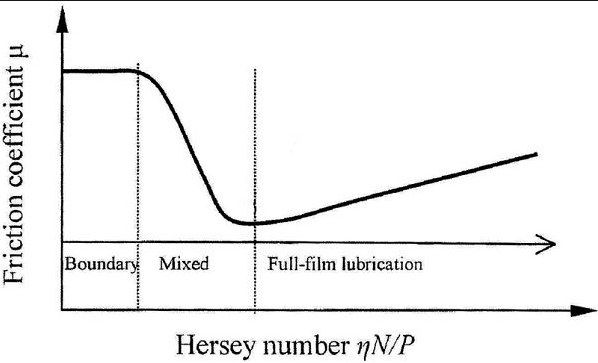
- Viscosity x speed / load
- Used with the Stribeck curve to relate friction to these variables
Q14What does the Stribeck curve show?▸
- Relationship of friction to movement speed (head size) and viscosity of lubricant
- Also shows the effect of load on the bearing surface