Neuromuscular
Arthrogryposis - management
Arthrogryposis multiplex congenita: contracture patterns, releases, casting and early mobilisation
10 questions
1 source pages
1 images
Images appear with the first question taken from each source page — tap a question to open it.
Q1How does arthrogryposis present and what does the neurological examination indicate?📷▸
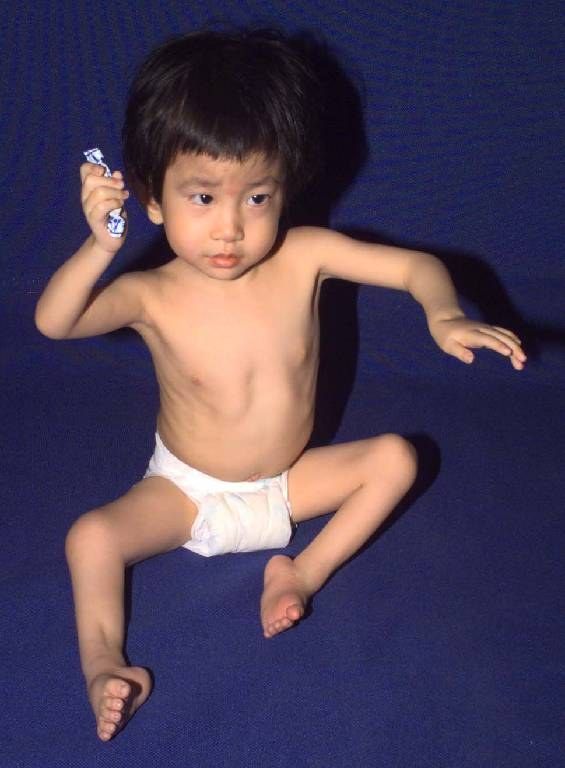
- Non-progressive congenital disease with limited movement involving 2 or more joints
- Limbs: tubular, fusiform, featureless, without skin creases
- Positions: pronated forearm, extended elbow, hand in palm; FABER, foot deformity
- UL: shoulder abducted, IR, elbow extended, wrist UD + flexed, fingers flexed at MCPJ and IPJ, thumb adducted (in palm)
- Normal neuro exam: amyoplasia, distal arthrogryposis, generalised connective tissue disorder or fetal crowding
- Abnormal neuro exam: diminished in-utero movement due to abnormal CNS, PNS, motor endplate or muscle
Q2What are the other manifestations of arthrogryposis?▸
- Upper extremity deformity
- Teratologic hip subluxation and dislocation
- Knee contractures
- Foot: clubfoot, vertical talus
- Possible: DDH, dislocated knee, clubfoot
- Neuromuscular C-shaped scoliosis 33%; fractures 25%
- Extraskeletal: haemangioma on forehead, abdominal wall anomalies (inguinal hernia, gastroschisis)
Q3How is arthrogryposis assessed and what is the natural history?▸
- Diagnosis: EMG, muscle biopsy, enzyme study, genetic study
- X-ray spine and pelvis
- MDT: paediatrician, ortho, geneticist, physio, P&O, psychologist
- Normal face, IQ and normal life expectancy
- Aim: increase joint mobility and muscle strength to develop adaptive use patterns that allow for walking and independence with ADLs
- 25% non ambulatory
Q4What is the aetiology and what are the forms of arthrogryposis?▸
- 1 in 3000 births; the direct factor causing akinesis is unknown
- Intrinsic causes: myopathic, neuropathic, fibropathic (neurogenic 90%, myopathy)
- Extrinsic: decreased IU movement, IU infection, oligohydramnios, multiple pregnancy, amniotic bands
- Maternal disease: diabetes, myasthenia gravis
- Sporadic Arthrogryphosis multiplex congenita (4 limbs); distal arthrogryphosis
- Larsen (4 limbs, knee dislocation, clubfoot)
- Freeman Shelton (hand, foot, scoliosis + face (microstomia))
- Pteryrium syndrome (flexor web)
Q5What is amyoplasia?▸
- Classic form of AMC: sporadic multiple contracture syndrome
- Symmetrical involvement of multiple UL and LL joints; CNS normal
- Muscle tissue replaced by fibrofatty tissue; most commonly seen form
- 1 in 10,000 births, 30% of all congenital contractures
- Types: I localised; II full expression (thin limbs, elbows extended, wrists flexed and ulnarly deviated, intrinsic plus hands, adducted thumbs); III adds polydactyly
Q6What are the Drummond principles of operative management?▸
- Deformity recurrence is common - dense inelastic soft tissue does not elongate with growth
- Regain muscle balance if muscle is functional
- Delay osteotomy until maturity
- Maximal correction by surgery (tenotomies + capsulectomies) as conservative treatment is ineffective
- Shortening procedure if recurrence (e.g. talectomy)
Q7What are the limb positions and associated deformities in arthrogryposis?▸
- Upper limb: shoulder abducted and internally rotated, elbow extended, wrist ulnar deviated + flexed, fingers flexed at MCPJ and IPJ, thumb adducted (in palm)
- Lower limb: hip flexed, externally rotated, abducted (FABER), knee flexed (contracture), equinus
- Also check the spine for scoliosis; possible DDH, dislocated knee, clubfoot; normal face and IQ
Q8What are the upper limb operative options in arthrogryposis?▸
- IR contracture of shoulder: external humeral rotational osteotomy
- Elbow extension contracture preventing hand to mouth: posterior capsulotomy and triceps lengthening
- Wrist: dorsal carpal wedge osteotomy +/- FCU transfer to preserve arc of motion
- Correction of the thumb-in-palm deformity
Q9How is hip involvement in arthrogryposis treated?▸
- Unilateral: operative reduction (OR)
- Bilateral: controversial - used to be conservative, now a trend towards sequential reduction
Q10What is the role of physiotherapy in arthrogryposis?▸
- Passive range will improve
- Active range and muscle power will not improve