Limbs Dysplasia Deformity
Congenital hip and knee deformity
Signs of developmental dysplasia of the hip and congenital knee dislocation in infancy.
16 questions
2 source pages
1 images
Images appear with the first question taken from each source page — tap a question to open it.
Q1What is the normal foot progression angle?▸
- Normal -5 to 20 degrees
- The child in the photo shows classic W sitting and is suspected to have in-toe gait
Q2Describe the components of the Staheli rotational profile.▸
- Femoral anteversion: hip ER/IR ~ 20/<70 (EFA if IR >70), Craig's test
- Tibial torsion: thigh-foot angle 10 to 20 (ITT if TFA <10)
- Transmalleolar axis (when foot deformity present); any negative value is abnormal
- Heel bisector line
Q3What are the causes of intoeing by age group?▸
- Infancy: metatarsus adductus, tibial intorsion
- Toddler: tibial intorsion
- Childhood: femoral anteversion
- Pathological: DDH, CP, Blounts
Q4What are the causes of out-toeing?▸
- Pes planus; femoral retroversion
- Infancy: hip ER contracture; later childhood: tibial extorsion
- Pathological: SCFE, Perthes, PFFD
Q5What is the natural history of intoeing and how would you counsel the family?▸
- Natural history is out-in-out; maximum intoe at age 11
- Neonate to 11: intoeing due to resolution of intrauterine position
- After 11: femoral anteversion decreases and tibial external torsion increases (2-4 to 10-20)
- The only effective treatment is to cut the femur, rotate it and fix it - major surgery with risks for an essentially cosmetic problem
Q6What are the indications for surgery in intoeing and what procedures are used?▸
- Thigh-foot angle < -10
- Femoral anteversion >50 or hip IR >80
- Plus disabling symptoms (rare); timing >10 years
- Femur: intertrochanteric femoral osteotomy; tibia: supramalleolar tibial osteotomy
Q7What history should be taken in a child with suspected intoeing?▸
- Birth and perinatal history
- Developmental milestones
- Current problems: pain, limp, frequent tripping
- Onset and progression of intoeing
Q8What should be checked on examination in a child with intoeing?▸
- Check spine
- Hips (DDH)
- Knees (Blounts: AVIP)
- Ligamentous laxity
Q9What is the mainstay of management of intoeing and which pathological conditions must be ruled out?▸
- Rule out DDH, Blounts, clubfoot, skewfoot, NM disorders
- Once pathological conditions are ruled out, the mainstay is counselling and reassurance
- Family counselling includes the natural history (out-in-out, maximum intoe at age 11)
Q10What is the natural history of femoral version?▸
- At birth: 30-40 degrees anteversion
- Adult: 8-15 degrees anteversion
Q11What is the natural history of tibial version (transmalleolar-thigh angle)?▸
- At birth: 2-4 degrees ER
- Adult: 10-20 degrees ER
Q12Describe the Tarek classification of congenital knee dislocation.📷▸
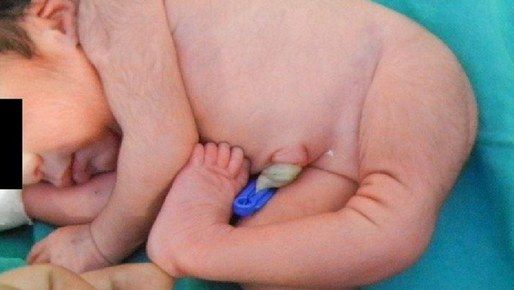
- Based on the amount of passive knee flexion
- Recurvatum >90
- Subluxation 30-90
- Dislocation <30
Q13What are the causes of congenital knee dislocation?▸
- Packaging syndrome
- Arthrogryposis / Larsen syndrome
- Ehlers-Danlos syndrome
Q14Which other packaging dislocations should be looked for?▸
- Torticollis
- DDH
- Congenital talipes equinovarus (cTEV)
- Congenital vertical talus
Q15What is the pathoanatomy of congenital knee dislocation?▸
- Quadriceps contracture
- Hamstrings subluxed to the anterior
- Overall extension moment at the knee
Q16How is congenital knee dislocation managed?▸
- Conservative first line: serial casting with gradual knee flexion
- Hip and knee dislocation: treat the knee first, otherwise it will not fit a Pavlik harness (always associated with Graf 3 DDH)
- OT indication: failed 30 degrees knee flexion after 3 months of casting
- Aim: soft tissue release to obtain 90 degree flexion - quad VY plasty