Arthritis
Osteoporosis and FRAX assessment
Osteoporosis definition, risk factors and FRAX fracture risk scoring
10 questions
2 source pages
2 images
Images appear with the first question taken from each source page — tap a question to open it.
Q1What is the WHO definition of osteoporosis?📷▸
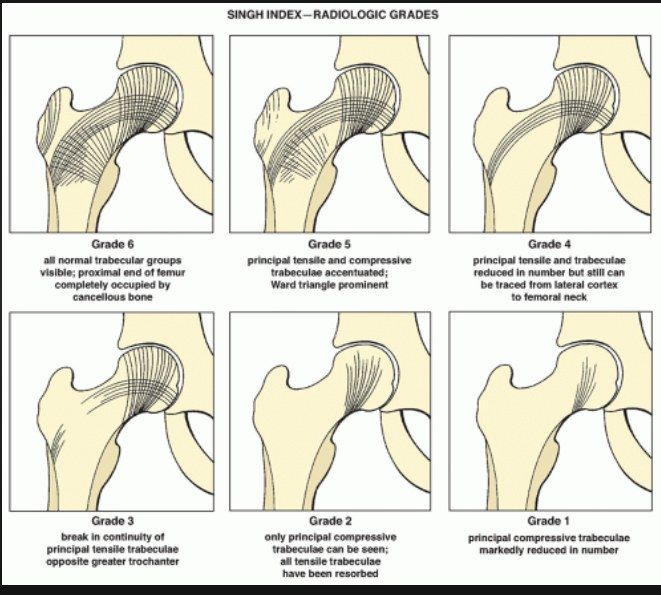
- Global 3-dimensional reduction in bone mineral density
- T score <-2.5
- Leading to increased susceptibility to fracture
Q2What is the pathophysiology of osteoporosis?▸
- Imbalance/uncoupling of bone formation and resorption
- Due to interplay of genetic, intrinsic, exogenous and lifestyle factors
Q3What age-related and molecular mechanisms contribute to osteoporosis?▸
- Aging -> loss of gonadal function
- Molecular level: Wnt-catenin signalling pathway (key role in the fate of MSC) -> promotes survival of the osteoblast lineage of cells
Q4What is DEXA and how is the patient positioned?▸
- DEXA = dual energy X-ray absorptiometry
- Hip: supine, hip IR 15 degrees
- Spine: supine, hip flexion 90 degrees
Q5What causes a false negative DEXA result?▸
- Sclerotic metastases
- Previous surgery with implant
Q6What causes a false positive DEXA result?▸
- Osteolytic metastases
- Laminectomy
- Collapse fracture
Q7What is the Singh index?▸
- Grade according to the trabecular line
Q8What is the FRAX score and what is its limitation?📷▸
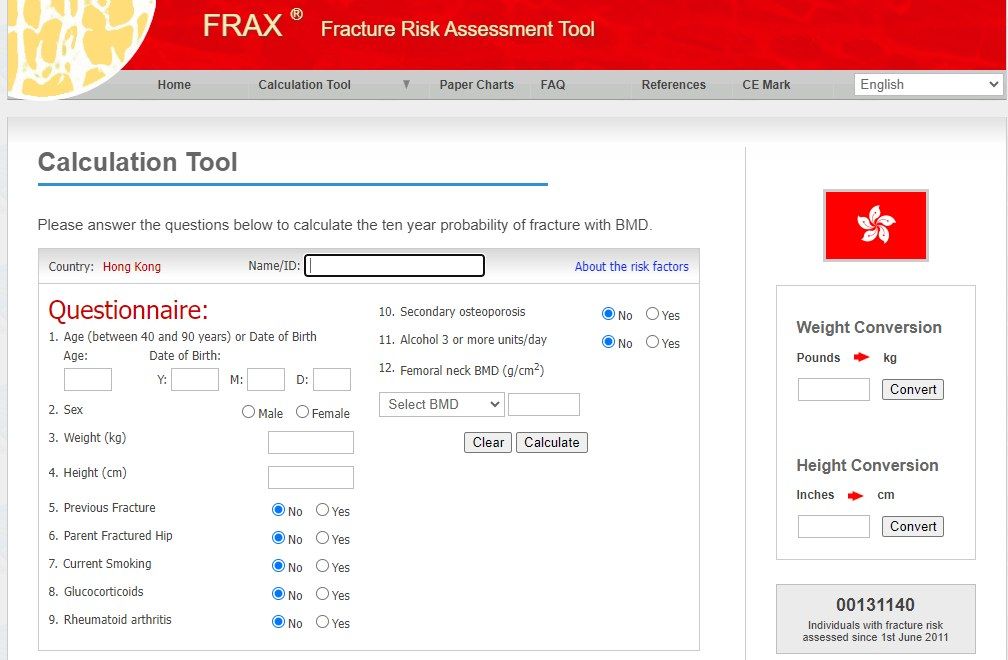
- Fracture risk assessment score
- Limitation: not comprehensive
Q9Which version of the FRAX score is used in this lecture?▸
- The Hong Kong version
Q10List the risk factors used in FRAX.▸
- Age, sex, weight
- Previous fracture; parent fractured hip
- Current smoking; glucocorticoids
- Rheumatoid arthritis; secondary osteoporosis
- Alcohol 3 or more units/day
- Bone mineral density (BMD)