13 slides
▸ Slide 1 · Basic scienceBasic Science · 2 questions expand
Slide render
Question list
Q1-Q22 questions — tap to reveal all answerslist
- What is the scope of this introductory basic science slide?
- Which basic science topics should be revised from this section?
Answers · Q & A
Q1.What is the scope of this introductory basic science slide?
- Not covered in the speaker notes
- The slide image is the only source for this slide
Q2.Which basic science topics should be revised from this section?
- Not covered in the speaker notes
- No topic list is provided in the notes
▸ Slide 2 · Stress strain curveBasic Science · 15 questions expand
Slide render
Question list
Q1-Q1515 questions — tap to reveal all answerslist
- Describe the axes of a stress-strain curve.
- Describe the elastic phase of the stress-strain curve.
- What is Young's modulus and what does it measure?
- Differentiate the proportionality limit, elastic limit and yield stress.
- What happens during the plastic phase of a stress-strain curve?
- What is strain hardening and how does cold working relate to it?
- What is necking and what causes it?
- What does the area under the stress-strain curve represent?
- Why is annealing performed and what are its three stages?
- Give the sequence of Young's modulus of materials.
- What is special about the stress-strain behaviour of tendon and ceramic?
- Define stiffness, hardness and rigidity.
- Define ductility, toughness and strength.
- Define notch sensitivity, endurance limit and fatigue life.
- Draw and label a stress-strain curve (slide task).
Answers · Q & A
Q1.Describe the axes of a stress-strain curve.
- Y axis = stress = force/area (N/m2)
- X axis = strain = change in length over original length (no unit/%)
- Graph measures tensile stress, but compressive and bending forces relate more to daily use
Q2.Describe the elastic phase of the stress-strain curve.
- Proportional change of stress and strain
- Slope is Young's modulus, measuring material stiffness
- Behaviour follows Hook's law
Q3.What is Young's modulus and what does it measure?
- Slope of the elastic phase of the stress-strain curve
- Measures material stiffness
Q4.Differentiate the proportionality limit, elastic limit and yield stress.
- Proportionality limit: stress at which Hook's law is no longer obeyed
- Elastic limit: stress at which deformation stops being entirely reversible (end of elastic phase)
- Yield stress: stress needed to induce 0.2% permanent strain (start of plastic phase)
Q5.What happens during the plastic phase of a stress-strain curve?
- Yielding represents material bond breakage
- The kink: upper and lower yield point due to grain dislocations and relocations, usually in ductile materials
- Strain hardening increases resistance to further deformation
- Highest point is the ultimate tensile strength (UTS), then necking and breakage
Q6.What is strain hardening and how does cold working relate to it?
- Plastic deformation increases a material's resistance to further deformation
- Lattice defects become too numerous and restrict each other's movements
- Cold working increases the yield point and ultimate tensile strength
- At the expense of lower ductility and toughness
Q7.What is necking and what causes it?
- Dislocation of molecules after the UTS
- Leads to reduction in the cross sectional area
- Followed by breakage of the material
Q8.What does the area under the stress-strain curve represent?
- Toughness of the material
- Energy absorbed per unit area before fracture
Q9.Why is annealing performed and what are its three stages?
- Heating above the recrystallisation temperature after cold working, to restore original properties
- Stages: recovery, recrystallisation, grain growth
- Reduces hardness, making it more workable for further work hardening, and relieves internal stresses
- Increases ductility and enhances toughness
Q10.Give the sequence of Young's modulus of materials.
- Ceramic, cobalt chrome, stainless steel, titanium, matrix polymers
- Then cortical bone, PMMA, PE, cancellous bone, tendon, cartilage
Q11.What is special about the stress-strain behaviour of tendon and ceramic?
- Tendon: initial toe phase when collagen fibres align longitudinally to take up stress; fails in a stepwise manner as fibres break sequentially
- Ceramic: high Young's modulus with a very short/no plastic phase
Q12.Define stiffness, hardness and rigidity.
- Stiffness: ability of a material to resist deformation (slope of a load-displacement curve)
- Hardness: resistance of a localised surface to deformation; takes into account stiffness and UTS; not a basic mechanical property
- Rigidity: a structure's ability to resist deformation
Q13.Define ductility, toughness and strength.
- Ductility: degree of plastic deformation a material can undergo before failure
- Toughness: energy per unit volume a material can absorb before failure (from ductility and the UTS)
- Strength: maximal stress a material can withstand before fracture
Q14.Define notch sensitivity, endurance limit and fatigue life.
- Notch sensitivity: sensitivity to fracture from a surface inhomogeneity (do not mix up with scratch profile)
- Endurance limit: stress withstand after 10 million cycles without fatigue failure
- Fatigue life: number of cycles needed to cause failure at a specific stress level
Q15.Draw and label a stress-strain curve (slide task).
- Label the elastic phase (slope = Young's modulus) and plastic phase
- Mark proportionality limit, elastic limit, yield stress, UTS and breakage
- Show area under the curve = toughness
- Slide asks to draw the curve and give the sequence of Young's modulus, plus tendon and ceramic
▸ Slide 3 · ViscoelasticityBasic Science · 6 questions expand
Slide render
Question list
Q1-Q66 questions — tap to reveal all answerslist
- Define a viscoelastic material.
- Compare the behaviour of an elastic solid and a viscous liquid.
- Define creep.
- Define stress relaxation.
- What is the effect of loading rate on stiffness in viscoelastic materials?
- What is hysteresis?
Answers · Q & A
Q1.Define a viscoelastic material.
- Materials sensitive to the time and rate at which the load is applied
Q2.Compare the behaviour of an elastic solid and a viscous liquid.
- Elastic solid: stores all the energy used to deform it
- Viscous liquid: dissipates all the energy used to deform it by flow
- Viscoelastic materials are intermediate in properties between the two
Q3.Define creep.
- Constant stress
- Strain increases with time
Q4.Define stress relaxation.
- Constant strain
- Stress decreases with time
Q5.What is the effect of loading rate on stiffness in viscoelastic materials?
- Strain behaviour is time dependent
- Stiffness increases with increased rate of loading
Q6.What is hysteresis?
- Different stress-strain behaviour upon loading vs unloading
- Due to heat dissipated when micromolecules move against each other
▸ Slide 4 · S-N curve: number of cycles leading to fatigue fracture at a specific stressBasic Science · 5 questions expand
Slide render
Question list
Q1-Q55 questions — tap to reveal all answerslist
- What does an S-N curve show?
- What do the X and Y axes of the S-N curve represent?
- Define the endurance limit and what it divides.
- Differentiate brittle fracture, fatigue fracture and creep fracture.
- Define fatigue strength/limit.
Answers · Q & A
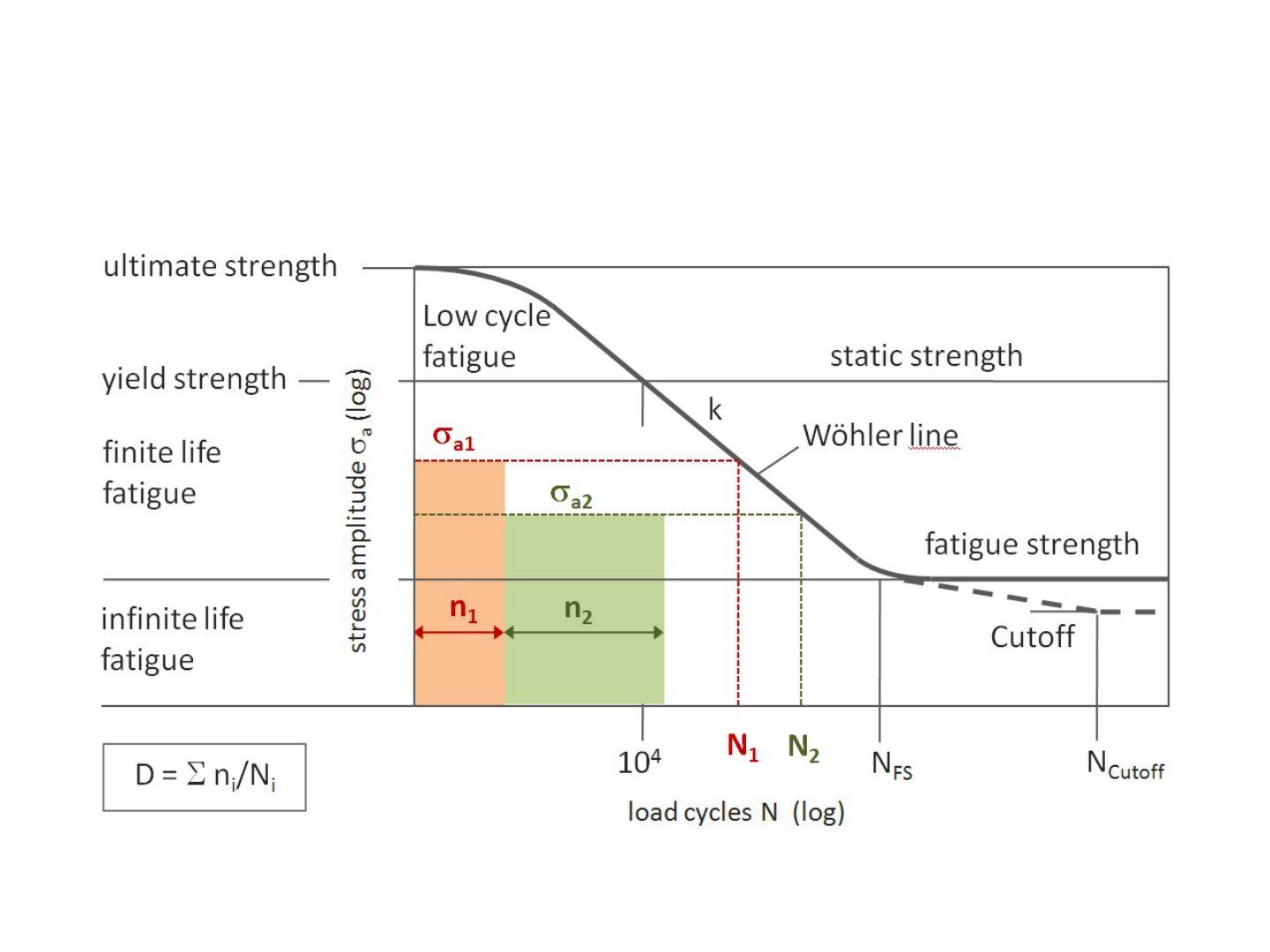
Q1.What does an S-N curve show?
- Number of cycles leading to fatigue fracture at a specific stress
- Left side = low cycle fatigue; right side = high cycle fatigue
Q2.What do the X and Y axes of the S-N curve represent?
- X axis = number of cycles (N)
- Y axis = stress (S)
- Plots the number of cycles leading to fatigue fracture at a specific stress
Q3.Define the endurance limit and what it divides.
- Stress a material can withstand after 10 million cycles without fatigue failure
- Divides finite-life fatigue from infinite-life fatigue
Q4.Differentiate brittle fracture, fatigue fracture and creep fracture.
- Brittle fracture: stress > UTS, single load
- Fatigue fracture: below UTS, above endurance limit, repetitive load
- Creep fracture: below UTS, above yield strength, constant load with time; fails when stretched out
Q5.Define fatigue strength/limit.
- Stress at which fracture occurs after a specified number of loading cycles
- Contrast with the endurance limit, defined at 10 million cycles
▸ Slide 5 · Progress of fatigue fractureBasic Science · 3 questions expand
Slide render

Question list
Q1-Q33 questions — tap to reveal all answerslist
- List the 3 zones of a fatigue fracture.
- What are ratchet marks and how do they form?
- What are beach marks and when are they absent?
Answers · Q & A
Q1.List the 3 zones of a fatigue fracture.
- 1. Crack initiation zone
- 2. Fatigue zone (beach marks)
- 3. Instantaneous zone
Q2.What are ratchet marks and how do they form?
- Formed when multiple fatigue origins are near each other
- A crack starts at each origin; as cracks meet, a ridge or step is formed
- Ratchet marks are not origins, but the location where cracks meet
Q3.What are beach marks and when are they absent?
- Alternating stripes of lighter and darker colour in the fatigue zone
- Colours result from different loading levels or environmental conditions
- Absent when cracks grow under uniform loading and environmental conditions
▸ Slide 6 · Photo showing wear in inner surface of femoral head and base of trunnion of femoBasic Science · 9 questions expand
Slide render
Question list
Q1-Q99 questions — tap to reveal all answerslist
- Define corrosion and list the types shown.
- Describe galvanic corrosion.
- Describe crevice corrosion.
- Describe pitting corrosion.
- What is fretting corrosion?
- What is stress corrosion?
- What is the trunnion and how is it designed?
- How can corrosion be reduced?
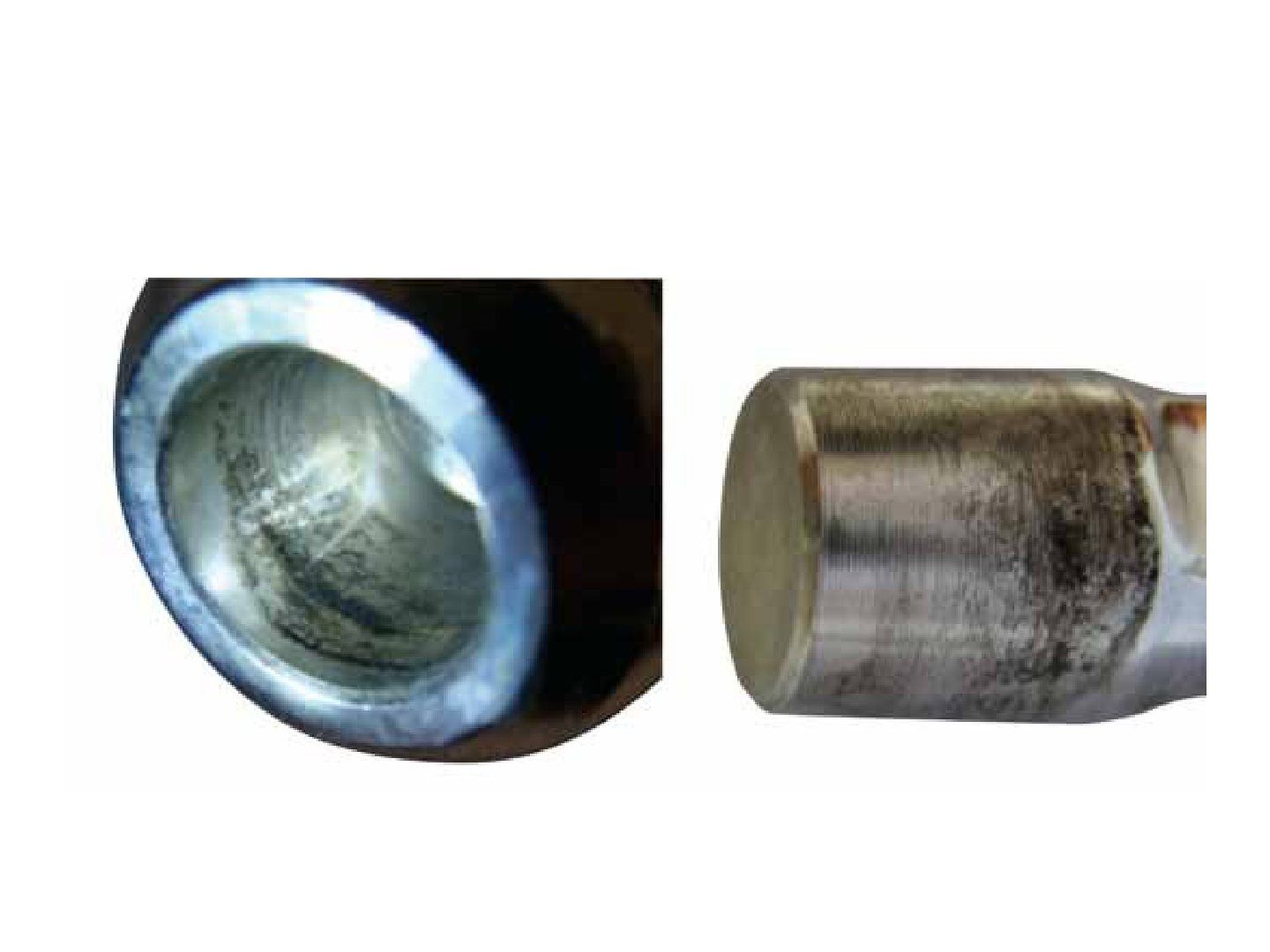
- How is wear classified and where was wear seen in the photo?
Answers · Q & A
Q1.Define corrosion and list the types shown.
- Destruction of material due to electrochemical reaction
- Galvanic, crevice, pitting, fretting and stress corrosion
Q2.Describe galvanic corrosion.
- Occurs with 2 dissimilar metals electrically coupled
- Difference in surface potential causes electron transfer from one metal to another
Q3.Describe crevice corrosion.
- A cavity is shielded off from the rest of the fluid
- Causes build-up of reactive species and decreased pH and O2 tension
Q4.Describe pitting corrosion.
- Pit from abrasion
- Then corrosion and material exposed
- Repeating cycle
Q5.What is fretting corrosion?
- Micromotion between two materials; combination of wear and corrosion
- Destruction of the oxide film
Q6.What is stress corrosion?
- Initial crack, then corrosion sets in
- Repeated mechanical loading causes fracture
Q7.What is the trunnion and how is it designed?
- Trunnion = shape of the proximal end of the modular femoral stem connecting with the femoral head
- Designed to be side bearing
- -ve/+ve mismatch in different manufacturers
- Side angle around 5-6 degrees; total <12 degrees = stable
Q8.How can corrosion be reduced?
- Material: choose a corrosion-resistant material, treat surface with passivation
- Construct: monoblock, careful technique to prevent surface scratching
- Do not use different metals in close vicinity
Q9.How is wear classified and where was wear seen in the photo?
- Wear divided into mechanical or chemical wear
- Likely chemical wear = corrosion in this region
- Photo shows wear on the inner surface of the femoral head and base of the trunnion of the femoral stem
▸ Slide 7 · Antibiotics containing acrylic beadsBasic Science · 4 questions 1 check expand
Slide render
Question list
Q1-Q44 questions — tap to reveal all answerslist
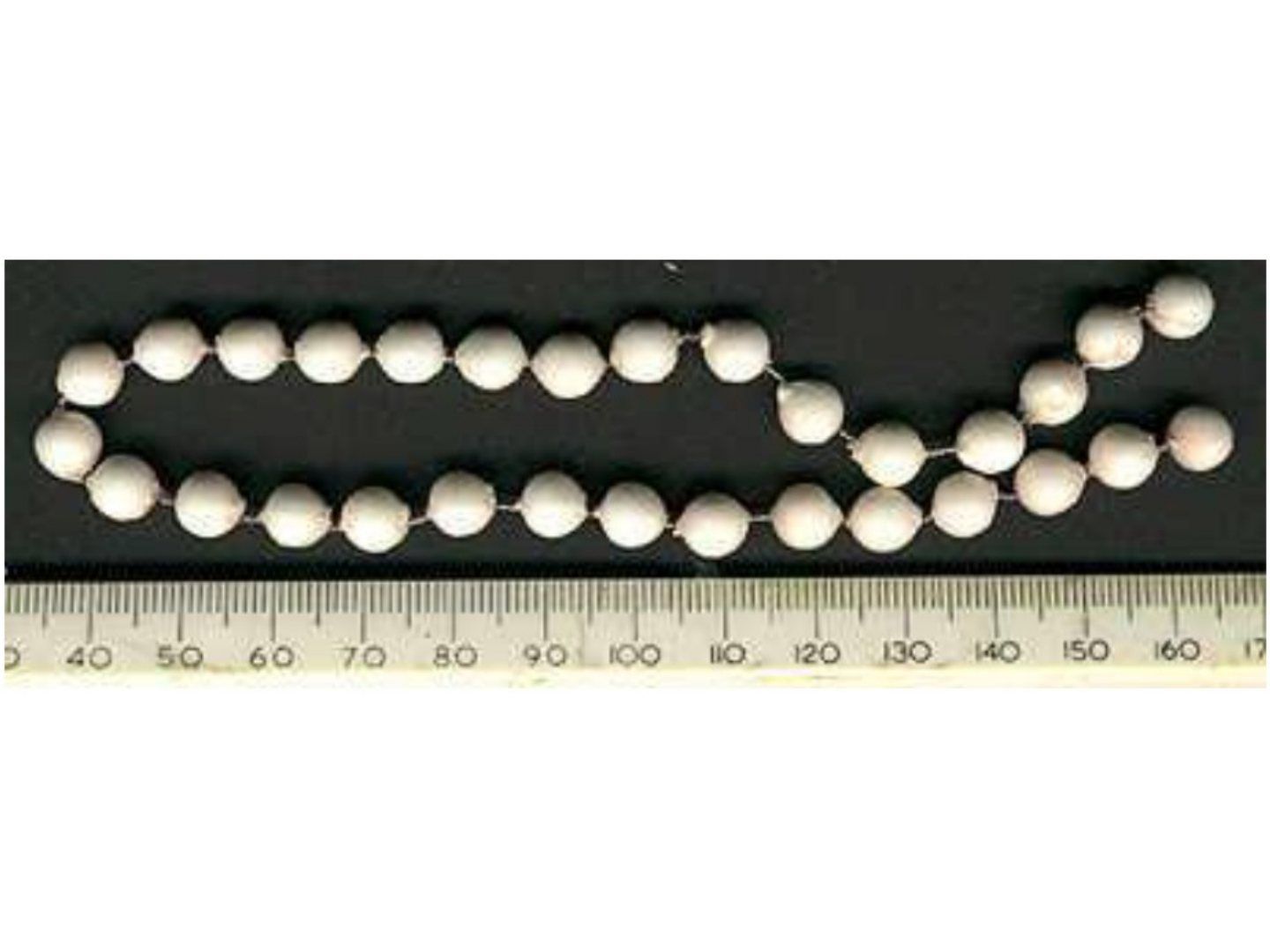
- What are antibiotic-containing acrylic beads made of?
- What are the advantages of antibiotic beads?
- What is the size and gentamicin content of each bead?
- Why is gentamicin suitable for antibiotic beads?
Answers · Q & A
Q1.What are antibiotic-containing acrylic beads made of?
- PMMA cement loaded with gentamicin sulphate
- Zirconium dioxide contrast medium, threaded on a metal wire
Q2.What are the advantages of antibiotic beads?
- High localised antibiotic concentration without systemic side effects
- Reduce dead space
Q3.What is the size and gentamicin content of each bead?
- Each bead is 7mm in diameter
- Contains 7.5g gentamicin per the speaker notes
Q4.Why is gentamicin suitable for antibiotic beads?
- Broad-spectrum aminoglycoside, effective against gram +ve and gram -ve bacteria
- Bactericidal, heat stable and soluble
- Low rate of resistance and allergy
- Low MIC (minimal concentration in situ to inhibit bacterial growth)
Fact check
Each antibiotic bead is 7mm and contains 7.5g gentamicin — Unit error: grams should be milligrams — Septopal PMMA beads are 7mm diameter and contain gentamicin in milligram amounts (reported around 4.5-7.5 mg per bead), not 7.5 g — source
▸ Slide 8 · Free body diagramBasic Science · 8 questions expand
Slide render
Question list
Q1-Q88 questions — tap to reveal all answerslist
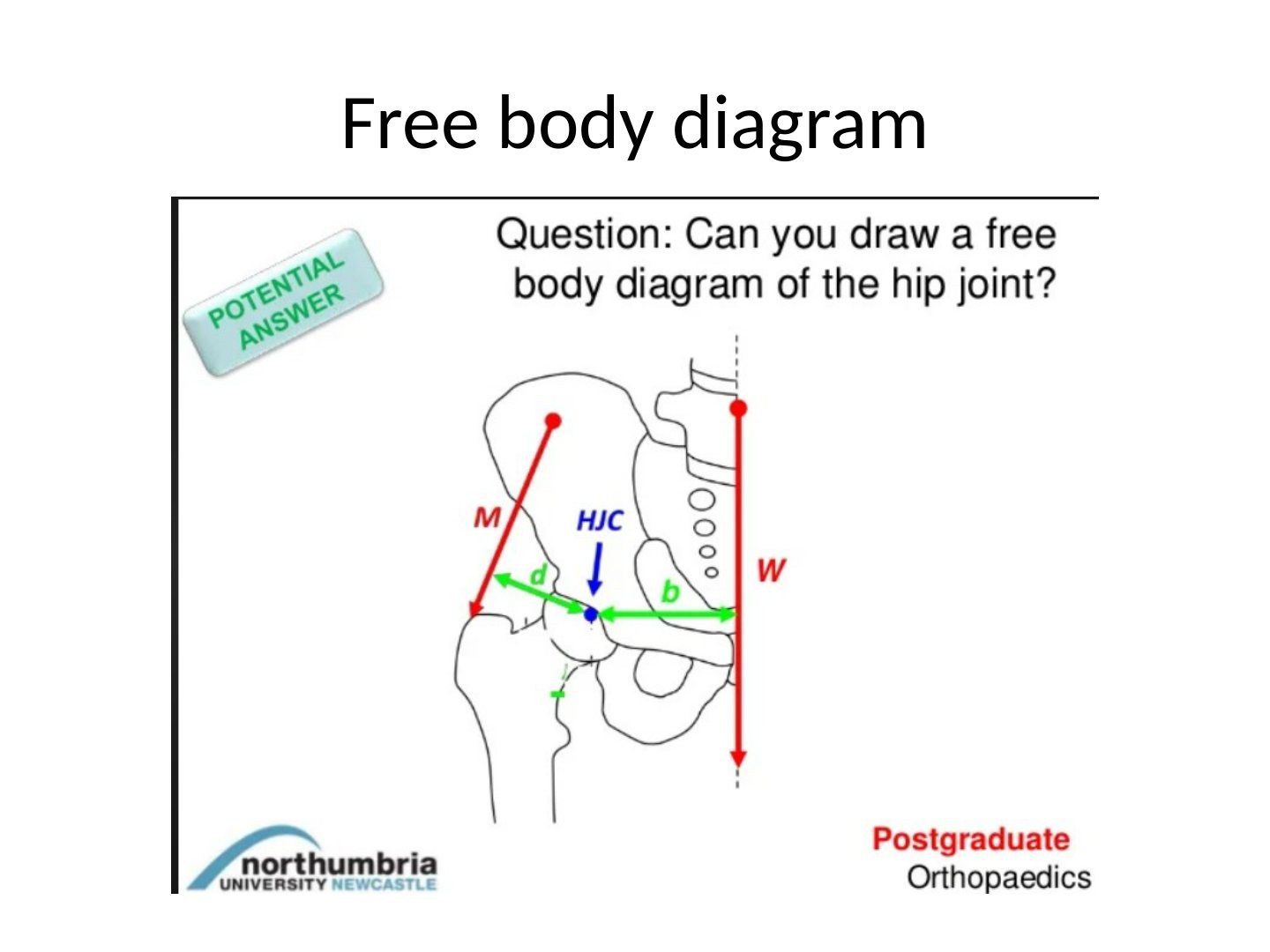
- Define joint reaction force, instant centre of rotation and centre of gravity.
- State Newton's laws and the definition of a Newton.
- Define vector, scalar, moment, work and energy.
- What are the assumptions of free body analysis at a joint?
- How can you reduce the joint reaction force at the hip?
- Give the lever class for shoulder, elbow, hip, ankle, MTPJ and spine.
- What is the advantage of a class 3 lever?
- Which free body diagram exercises are listed on this slide?
Answers · Q & A
Q1.Define joint reaction force, instant centre of rotation and centre of gravity.
- JRF: force generated within a joint in response to forces acting on the joint
- Instant centre of rotation: point about which a joint rotates
- Centre of gravity: just anterior to S2
Q2.State Newton's laws and the definition of a Newton.
- First law: no net force = velocity constant
- Second law: F = ma
- Third law: equal and opposite reaction (F2 = -F1)
- 1 Newton = force to give 1 kg an acceleration of 1 m/s2
Q3.Define vector, scalar, moment, work and energy.
- Vector: quantity with direction and magnitude; scalar: no direction
- Moment (torque) = force (perpendicular) x distance
- Work = force (vector parallel to displacement) x distance
- Energy = ability of an object to perform work
Q4.What are the assumptions of free body analysis at a joint?
- Static equilibrium and rigid fulcrum (bone)
- Frictionless joint and no antagonist muscle action
- Simple hinge lever, force in a single direction, line of action at the muscle centre
Q5.How can you reduce the joint reaction force at the hip?
- Reduce body weight
- Body tilt (antalgic gait tilts towards the painful side to reduce the BW moment arm)
- Contralateral stick
- Increase the abductor moment arm
- Ipsilateral suitcase helps the abductors
Q6.Give the lever class for shoulder, elbow, hip, ankle, MTPJ and spine.
- Shoulder 3, elbow 3
- Hip 1, spine 1
- Ankle 1 (or 2 if the MTPJ is the fulcrum)
- MTPJ 2
Q7.What is the advantage of a class 3 lever?
- Larger range of movement
- Hence seen in the upper limb
Q8.Which free body diagram exercises are listed on this slide?
- Draw FB diagrams of the ankle/MTPJ/knee/hip/shoulder/elbow/spine
- Show with a FB diagram how RSA helps deltoid function
- Explain with a FB diagram why kneeling increases PFJ pressure
- The notes list these as exercises but give no answers
▸ Slide 9 · Explain why proximal migration of humeral head in rotator cuff arthropathy with FB diagram.Basic Science · 2 questions expand

Question list
Q1-Q22 questions — tap to reveal all answerslist
- Why does the humeral head migrate proximally in rotator cuff arthropathy?
- On the free body diagram, which force becomes unopposed once the cuff fails?
Answers · Q & A
Q1.Why does the humeral head migrate proximally in rotator cuff arthropathy?
- Loss of supraspinatus and loss of downward coupling
- Excessive upward pull of the humerus
Q2.On the free body diagram, which force becomes unopposed once the cuff fails?
- The deltoid's upward pull on the humerus
- Normally balanced by the cuff's downward coupling force, so its loss causes proximal migration of the humeral head
▸ Slide 10 · TribologyBasic Science · 3 questions expand
Slide render
Question list
Q1-Q33 questions — tap to reveal all answerslist
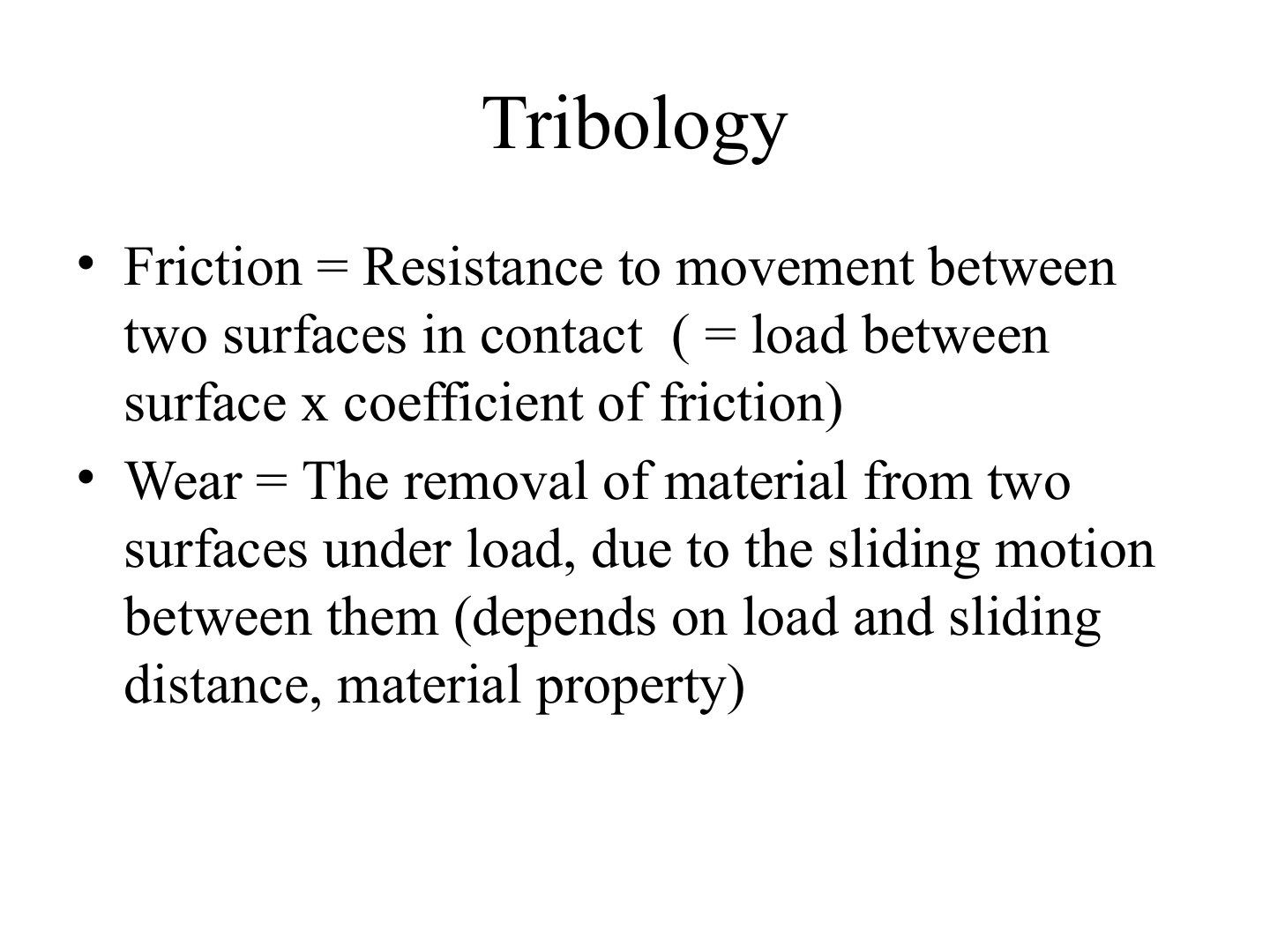
- Define tribology.
- Define friction.
- Define wear and what it depends on.
Answers · Q & A
Q1.Define tribology.
- Study of interacting surfaces
- Specifically surfaces in relative motion
Q2.Define friction.
- Resistance to movement between two surfaces in contact
- = load between surfaces x coefficient of friction
Q3.Define wear and what it depends on.
- Removal of material from two surfaces under load due to the sliding motion between them
- Depends on load, sliding distance and material property
▸ Slide 11 · Stribeck curveBasic Science · 2 questions expand
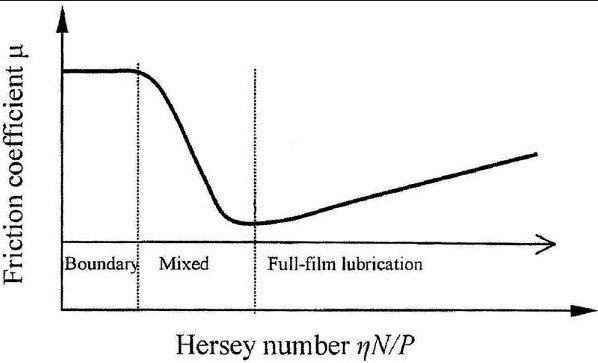
Question list
Q1-Q22 questions — tap to reveal all answerslist
- What is the Hersey number?
- What does the Stribeck curve show?
Answers · Q & A
Q1.What is the Hersey number?
- Viscosity x speed / load
- Used with the Stribeck curve to relate friction to these variables
Q2.What does the Stribeck curve show?
- Relationship of friction to movement speed (head size) and viscosity of lubricant
- Also shows the effect of load on the bearing surface
▸ Slide 12 · Clotting profileBasic Science · 3 questions expand
Slide render

Question list
Q1-Q33 questions — tap to reveal all answerslist
- How are the intrinsic and extrinsic clotting pathways activated?
- How do LMWH/heparin work?
- Match dabigatran, rivaroxaban and warfarin to their targets.
Answers · Q & A
Q1.How are the intrinsic and extrinsic clotting pathways activated?
- Intimal tear -> exposed collagen -> activates the intrinsic pathway
- Damage of vessels -> exposes extravascular tissue -> activates the extrinsic pathway
Q2.How do LMWH/heparin work?
- Activate antithrombin 3
- Antithrombin 3 inhibits factor 2 and factor 10
Q3.Match dabigatran, rivaroxaban and warfarin to their targets.
- Dabigatran: inhibits factor 2 (Bi = 2)
- Rivaroxaban: factor 10a inhibitor (Xa = 10a)
- Warfarin: inhibits factors 2, 7, 9, 10 via vitamin K epoxide reductase inhibition
▸ Slide 13Basic Science · 2 questions expand

Question list
Q1-Q22 questions — tap to reveal all answerslist
- What is the title of this slide?
- What content does this slide cover?
Answers · Q & A
Q1.What is the title of this slide?
- Slide 13
- No further detail in the speaker notes
Q2.What content does this slide cover?
- Not covered in the speaker notes
- The slide image is the only source